
读懂艺术家 | 南皮之游 · 崔明永×朴勋成×金玄植×宋贤淑×郑载荣×王绍强:物性与行为的本质探究
艺术的面貌千差万别,而艺术家的创作脉络,往往隐匿于作品光影的背后,静待深究。广东美术馆始终关注当代艺术的多元生态与个体表达,深信每一位艺术家都是独特的坐标,他们的思考与实践,共同绘制着时代的精神图景。为此,我们推出“读懂艺术家”系列栏目。这不仅是关于艺术家及其作品的常规介绍,更是一项长期的学术深耕与公共传播实践。我们将以此为载体,力求通过日积月累的专题呈现,逐步构建起一份详实、立体、具有文献价值的当代艺术家资料库。让我们一同,在持续的阅读与对话中,见证并书写正在发生的历史。
The face of art varies immensely, and the creative threads of artists often lie hidden behind the light and shadow of their works, awaiting deeper exploration. The Guangdong Museum of Art has always focused on the diverse ecology and individual expressions of contemporary art, firmly believing that every artist is a unique coordinate—their thoughts and practices together map the spiritual landscape of our time. To this end, we are launching the “Understanding the Artist” series. This is not merely a conventional introduction to artists and their works, but a long-term scholarly endeavor and a practice of public communication. Through this platform, we strive to gradually build, with sustained thematic presentations, a detailed, multi-dimensional, and archivally valuable database of contemporary artists. Let us together, through continuous reading and dialogue, witness and write the history that is unfolding.
第二,“物性与行为的本质探究”是本单元的重要主题。单色画大师崔明永 (Choi Myoung Young) 挑战平面的极限,将“绘画”这一行为的实存痕迹层层叠加。他是韩国第一代抽象绘画的大师。紧随其后的朴勋成 (Park Hoon-sung) 通过重叠的图层构建出自然界生成与消亡的规律,捕捉时空的痕迹。 金玄植 (Kim Hyun-shik) 通过透明环氧树脂间肉眼不可见的线条,创造出无限的空间深度,以此表现工业社会物质中所蕴含的宇宙起源之本质。宋贤淑 (Song Hyun-sook) 则以断然的一笔(一画),浓缩了对故乡的乡愁与人类最根源的情感,被誉为“挥毫的魔术师”。J Young 基于哲学思辨,将无形能量的流动转化为视觉语言,为展览增添了深度。而王绍强通过不断重复的书写行为,在探索与质问语言与文明边界的同时,也在进行着一种个人的修行。
The second theme is the Ontological Inquiry into Matter and Action. Choi Myoung Young, a master of Dansaekhwa and a giant of Korea’s first generation of abstract painting, tests the limits of the flat surface by layering existential traces of the act of "painting." Following him, Park Hoon-sung captures the traces of time and space by constructing the natural laws of creation and extinction through overlapping layers. Kim Hyun-shik creates infinite spatial depth through invisible lines between transparent epoxy, expressing the essence of the universe's origin through industrial materials. Song Hyun-sook, often called a "wizard of the brush," encapsulates nostalgia for her hometown and fundamental human emotions within a single, resolute stroke (the One-Stroke). J Young adds depth to the exhibition by translating invisible flows of energy into a visual language rooted in philosophical contemplation. Wang Shaoqiang, through the act of repetitive writing, explores and questions the boundaries of language and civilization, while simultaneously engaging in a form of personal cultivation.

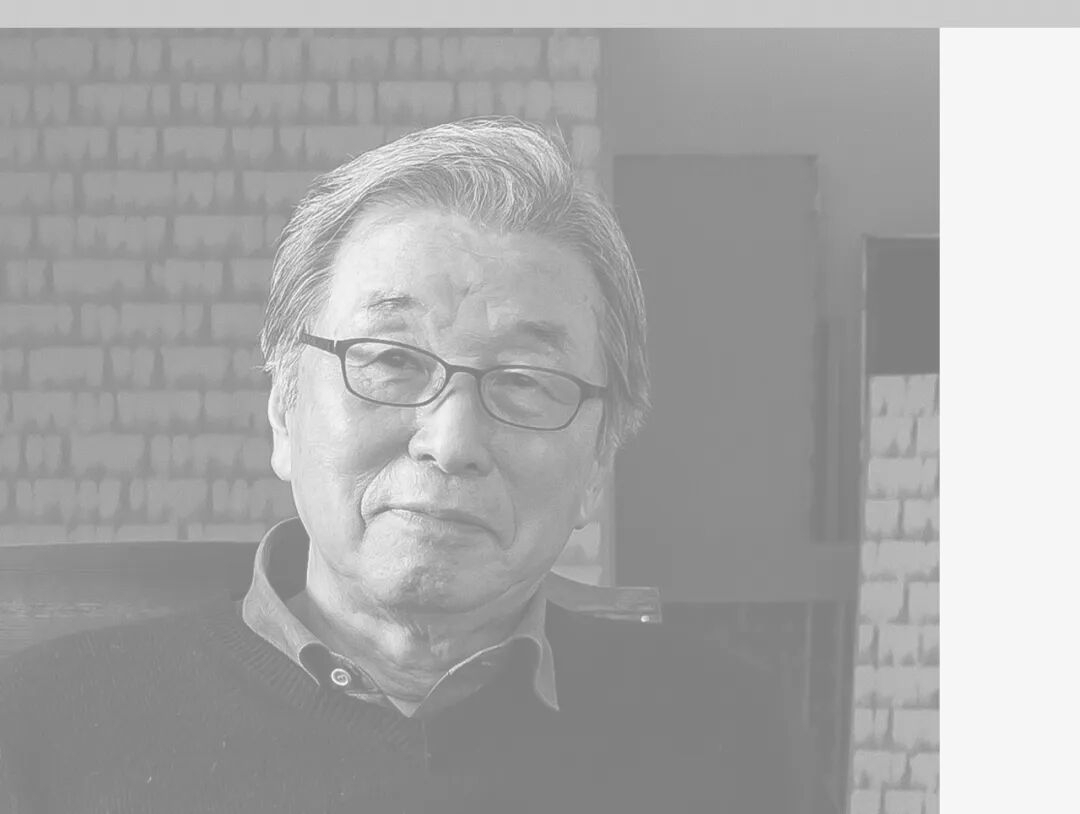 崔明永
崔明永Choi Myoung Young
1941 年生于朝鲜海州,现生活、工作于韩国首尔。1964 年毕业于弘益大学研究生院,是韩国单色画(Dansaekhwa)重要代表艺术家之一。其创作围绕 “平面与物质性” 的问题展开实验性探索。曾在东京、巴黎、首尔等地举办个展,并参加古根海姆博物馆、国立现代美术馆等重要展览。
Choi Myoung Young(b. 1941, Haeju,North Korea), currently lives and works in Seoul, South Korea. He graduated from the graduate school of Hongik University in 1964 and is one of the leading figures of the Korean Dansaekhwa. Choi focus on experimental exploration centered on the issues of “flatness and materiality”. Choi has held solo exhibitions in cities such as Tokyo, Paris, and Seoul, and has participated in significant exhibitions at institutions like the Guggenheim Museum and the National Museum of Modern Art in Korea.
Choi Myoung Young(b. 1941, Haeju,North Korea), currently lives and works in Seoul, South Korea. He graduated from the graduate school of Hongik University in 1964 and is one of the leading figures of the Korean Dansaekhwa. Choi focus on experimental exploration centered on the issues of “flatness and materiality”. Choi has held solo exhibitions in cities such as Tokyo, Paris, and Seoul, and has participated in significant exhibitions at institutions like the Guggenheim Museum and the National Museum of Modern Art in Korea.
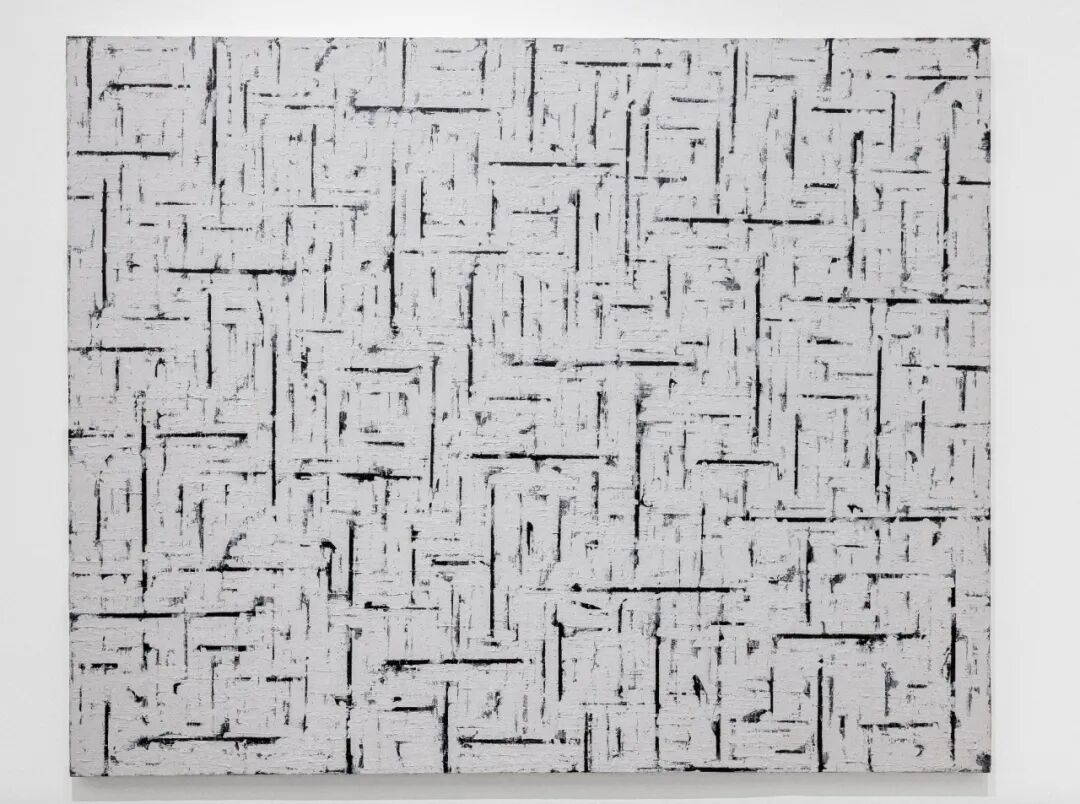
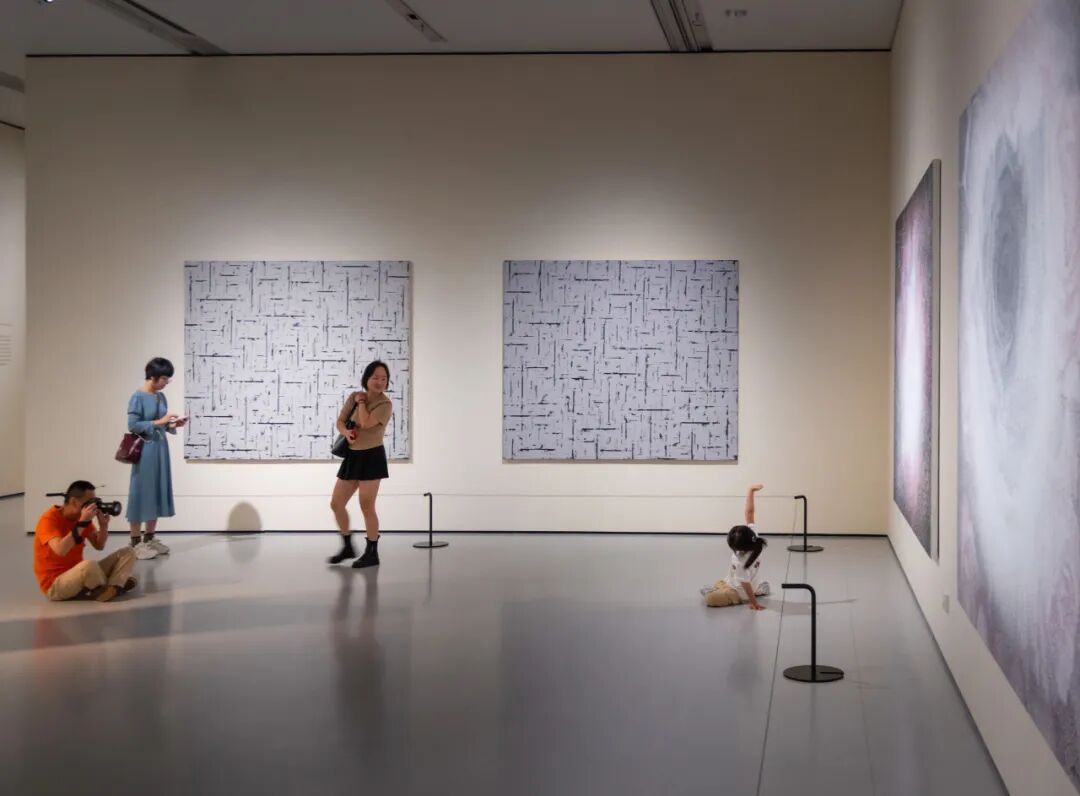
平面条件 9892
崔明永(韩国)
1998
布面丙烯
181.6cm × 227.3cm
Conditional Planes 9892
Choi Myoung Young(Korea)
1998
Acrylic on canvas
181.6cm × 227.3cm
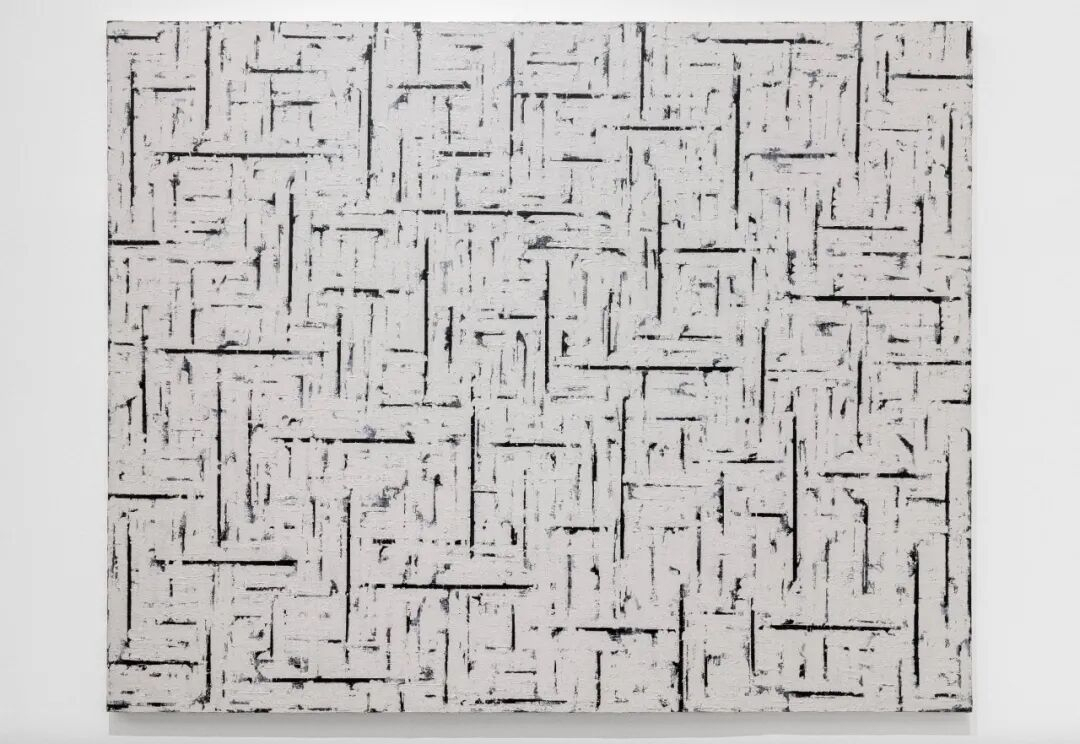
平面条件 9871
崔明永(韩国)
1998
布面丙烯
181.6cm × 227.3cm
Conditional Planes 9871
Choi Myoung Young(Korea)
1998
Acrylic on canvas
181.6cm × 227.3cm
对崔明永而言,绘画并非描绘某一对象后的结果。在《平面条件》中,画面拒绝叙事与再现,通过色彩、点与线的重复性排列,停留在一种平面自我显现的状态之中。这一实践所指向的并非“画什么”,而更接近于对“绘画如何得以存在”这一问题的追问。充满画面的细小方形痕迹与节律看似机械化的图案,但实际上它们在密度、间距与细微差异上各不相同。这种重复并不是为了将表达降至最低的策略,而是一种将平面运作的条件——均质性与差异性的并存——加以可视化的方法。
© 崔明永
致谢艺术家及首尔The Page画廊
For Choi Myoung Young, painting is not the outcome of depicting an object. In Conditional Planes series, the surface rejects narrative and representation, remaining instead in a state in which the plane reveals itself through the repetitive arrangement of color, dots, and lines. What is at stake here is not the question of “what to paint,” but rather “how painting can exist.” The small rectangular marks and rhythms that fill the surface may appear as mechanical patterns, yet each differs subtly in density and spacing. This repetition is not a strategy to minimize expression, but a means of making visible the conditions under which the plane operates—the coexistence of uniformity and difference.
© Choi Myoung Young
Courtesy of the artist and The Page Gallery, Seoul
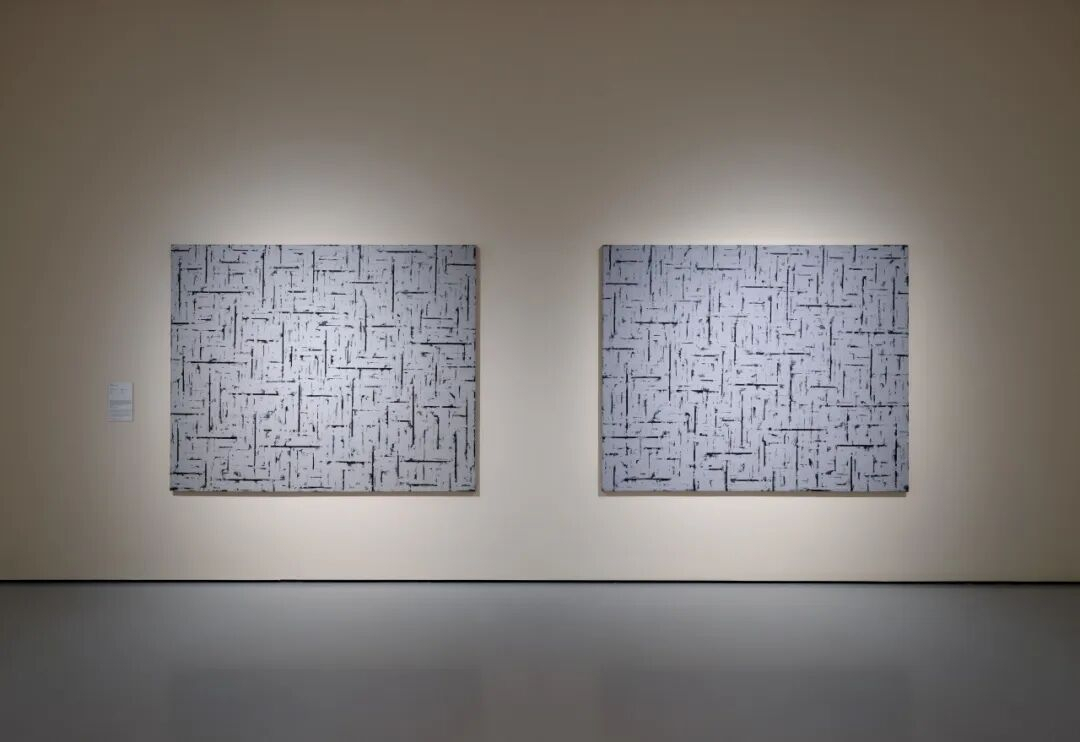
展览现场
 朴勋成
朴勋成Park Hoon-sung
1961 年生于首尔。先后就读于弘益大学美术学院与德国斯图加特国立美术学院,长期致力于绘画与版画创作,个人风格以材料性与抽象表现见长。曾在韩国、德国、日本、中国等地举办个人展与群展。曾获 MBC 美术大展大奖、东亚美术奖、中央美术大展奖励奖、韩国现代版画家协会公募展优秀奖等。
Park Hoon-sung (b. 1961, Seoul, Korea), is a graduate of Hongik University (College of Fine Arts) and the Stuttgart State Academy of Art and Design, Germany. He practices in painting and printmaking and explores materiality and abstract expression. He has exhibited internationally, including solo exhibitions in Korea, Germany, Japan, and China, and has received awards such as the MBC Art Grand Prize and the East Asia Art Prize.
Park Hoon-sung (b. 1961, Seoul, Korea), is a graduate of Hongik University (College of Fine Arts) and the Stuttgart State Academy of Art and Design, Germany. He practices in painting and printmaking and explores materiality and abstract expression. He has exhibited internationally, including solo exhibitions in Korea, Germany, Japan, and China, and has received awards such as the MBC Art Grand Prize and the East Asia Art Prize.
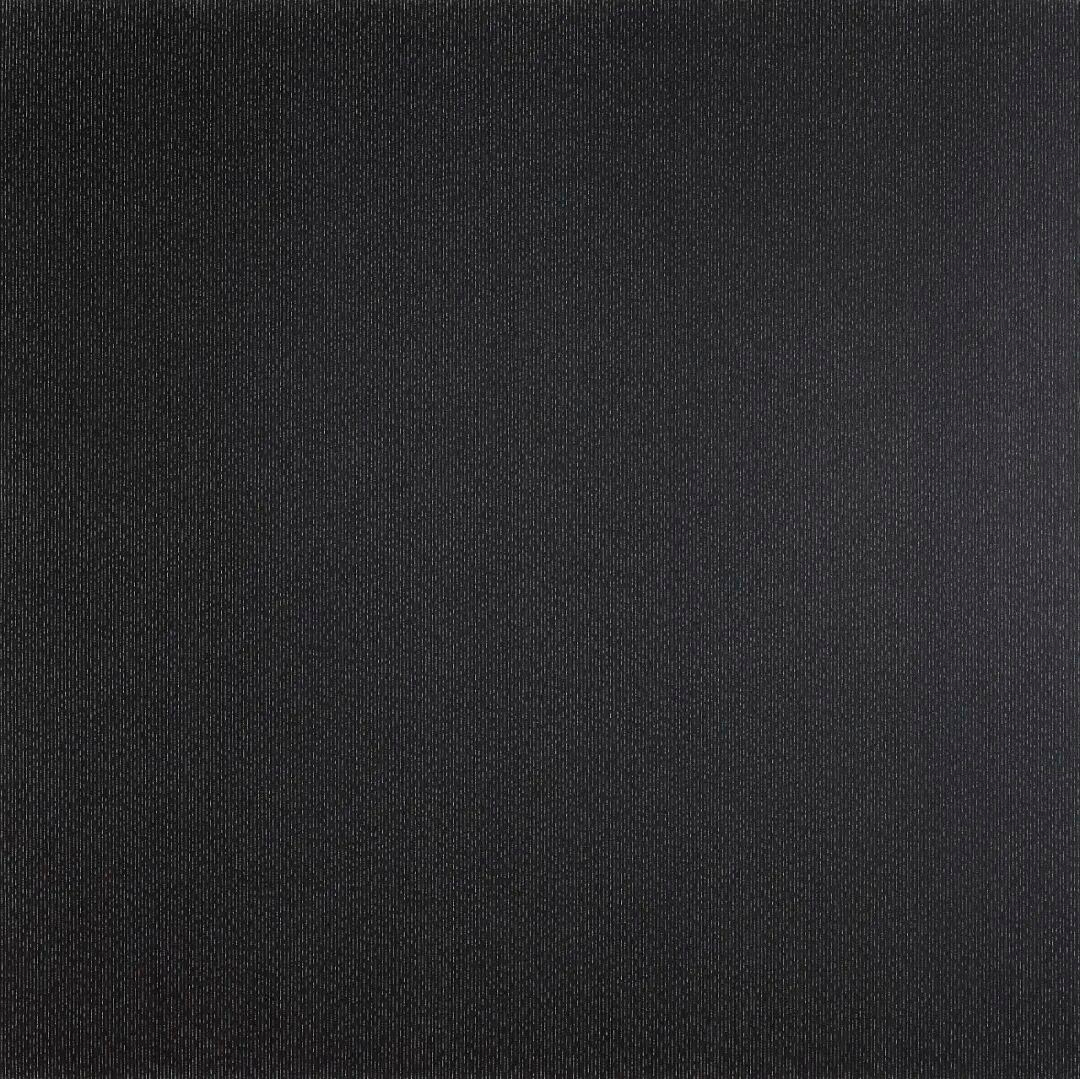
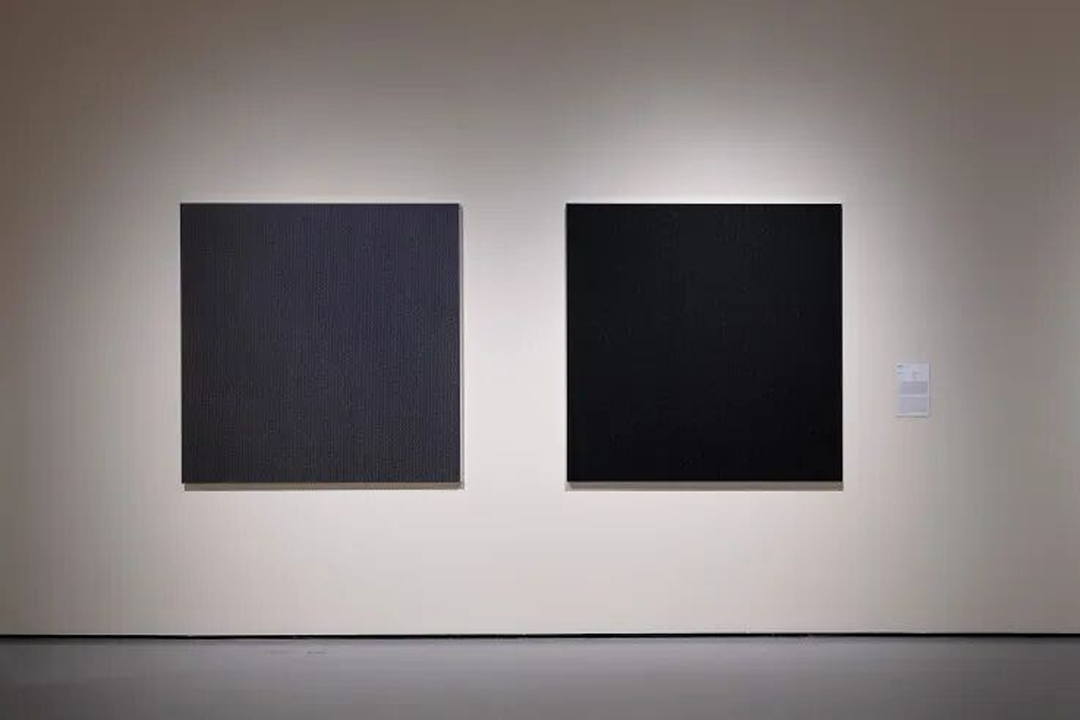
黑 2503-1
朴勋成(韩国)
2025
布面铅笔
150cm × 150cm
The Black 2503-1
Park Hoon-sung(Korea)
2025
Pencil on canvas
150cm × 150cm
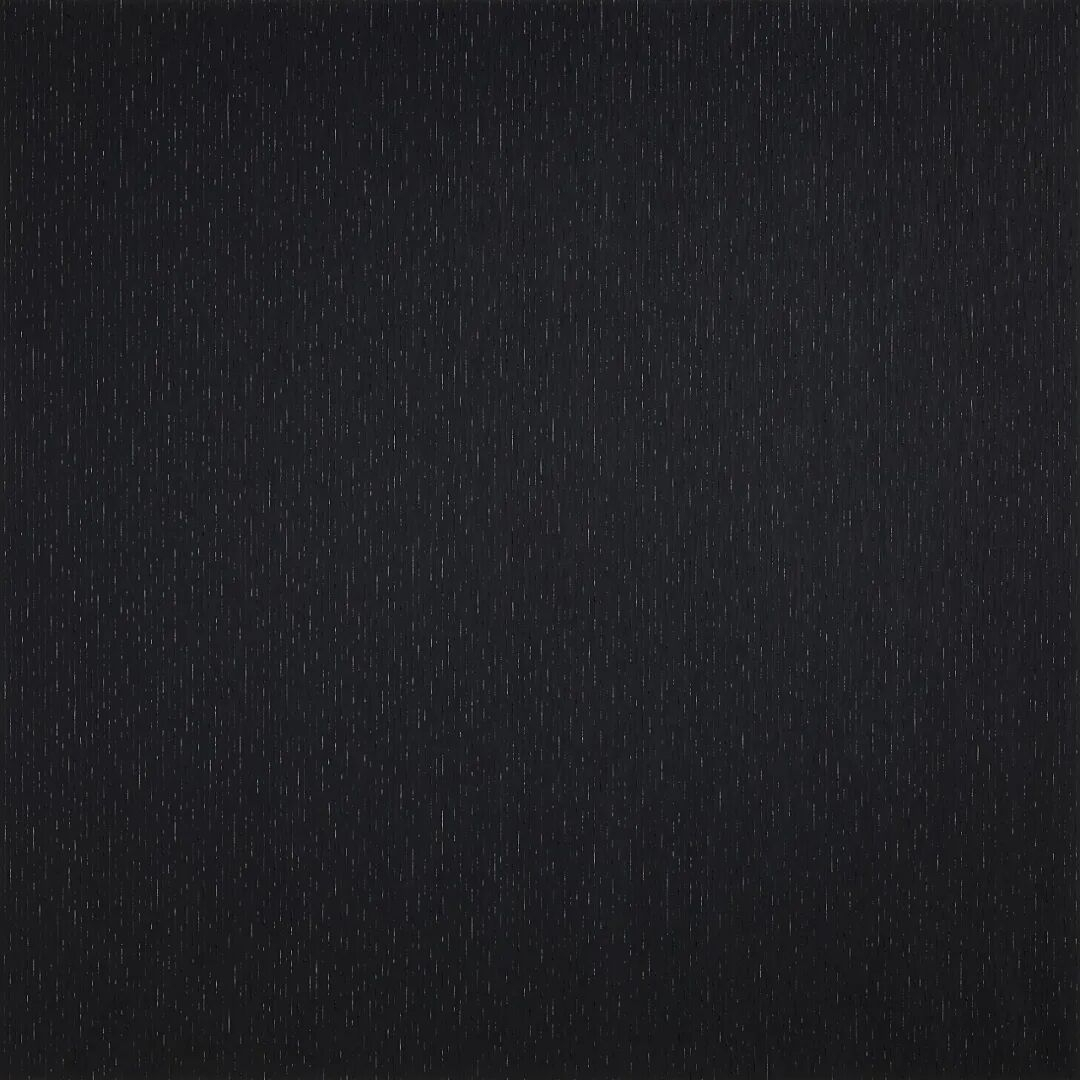
黑 2602-3
朴勋成(韩国)
2026
布面油画
150cm × 150cm
The Black 2602-3
Park Hoon-sung(Korea)
2026
Oil on canvas
150cm × 150cm
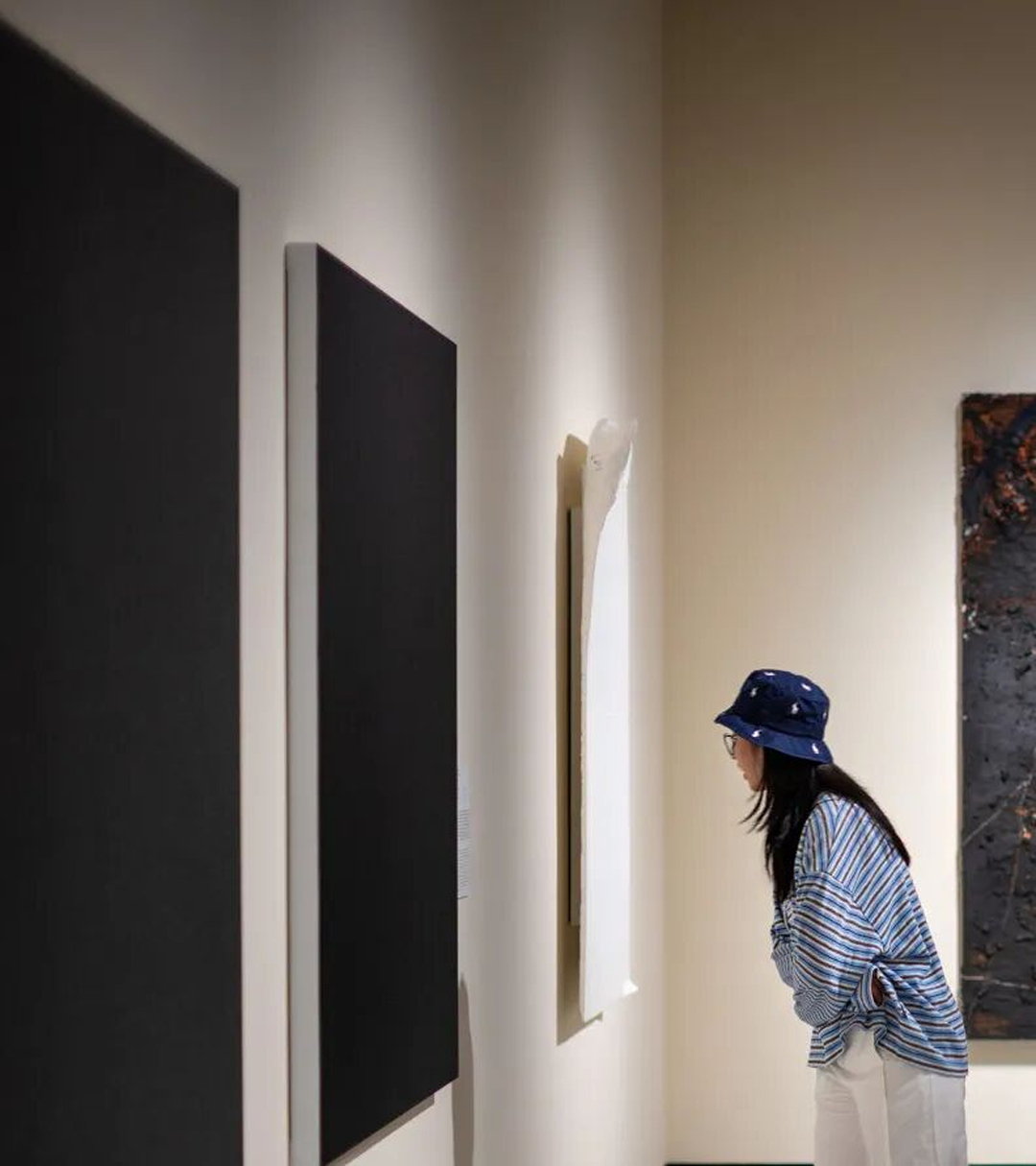
朴勋成的黑色并非黑暗的等价物。它通过无数叠加的线条、平面以及其间产生的微小缝隙,作为一个蕴含着不可见闪光的“密度之场”发挥作用。黑与黑之间产生的极度细微的缝隙,并非单纯的形式效果,而是作为世界暂时渗透又随即消失的通道而存在。在那些缝隙中,我们感知到了那些虽不可见却真实存在之物,以及虽已消逝却依然留存之物的痕迹。朴勋成避开语言,转而以“沉默”来思索这一奇点。流淌在他画面中的沉默并非空无,而是一种感官上的凝聚状态——那是怀揣着回响的沉默,是触觉上可感知的沉默。而他反复划线的行为,则更接近于顺着那沉默之纹理进行的“修德”姿态。在这种反复划线的过程中,黑色逐渐转变为存在的边界,进而成为指向存在之“不可能之死”的标记。它并非终结,而是一种被无尽延迟的消亡时间,即揭示了存在未能完全消失、徘徊在深渊之上的状态。
For Park Hoon-sung, black is not an equivalent to darkness. Instead, it functions as a field of density that harbors invisible flashes through countless overlapping lines, planes, and the minute gaps that emerge between them. The extremely fine fissures between layers of black are not merely formal effects; they serve as channels through which the world momentarily permeates and then vanishes. In those gaps, we perceive the traces of things that are unseen yet present, and things that have disappeared yet still remain. Park meditates on this point through silence rather than language. The silence flowing across his canvas is not a void, but a sensory condensation—a silence that holds resonance and can be perceived tactually. The act of drawing lines is akin to a gesture of ascetic practice ( 修德 ), following the very grain of that silence.Through this process of repetitive stroking, black gradually transforms into a boundary of existence, a marker pointing toward the "impossible death" of being. It is not an end, but a state of infinitely deferred extinction—a condition where existence lingers over the abyss, unable to vanish completely.
展览现场
 金玄植
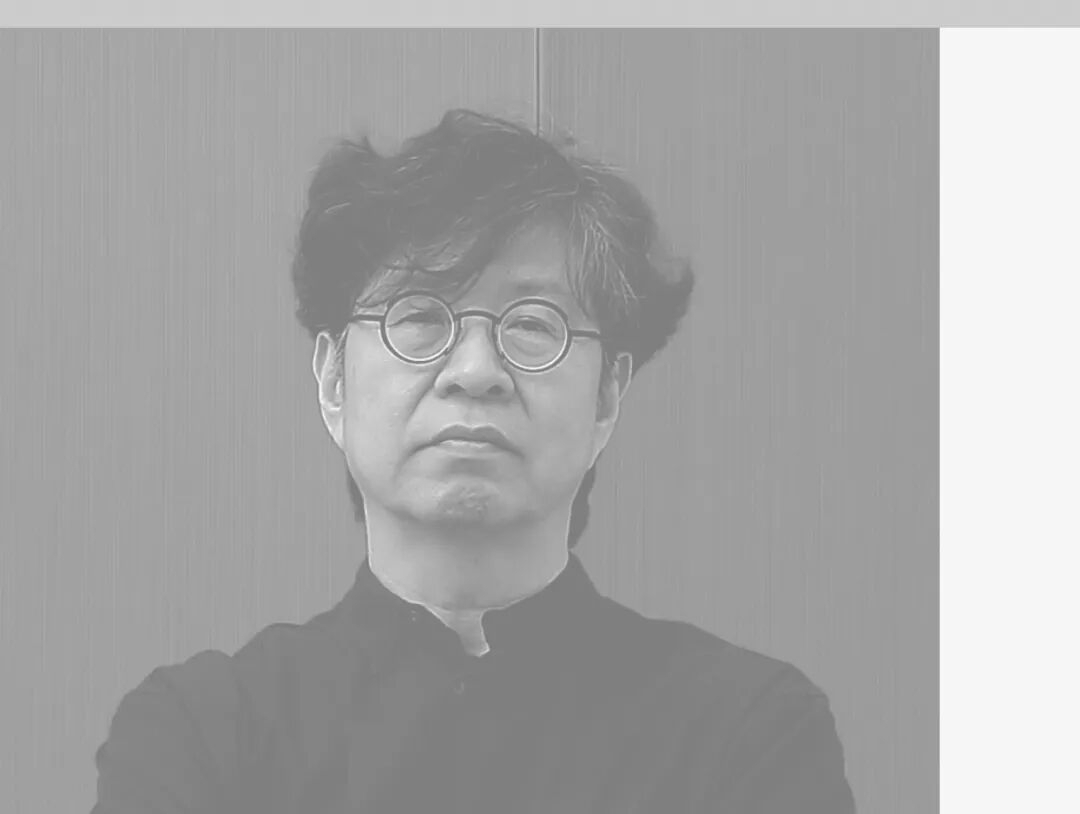
金玄植Kim Hyun-shik
1965 年生于韩国庆尚南道山清。1992 年毕业于弘益大学美术学院绘画系,是以 “色彩与光” 为核心展开创作的当代艺术家。其作品关注感知、空间与精神性的关系,通过层叠色域与微妙光感建构沉静而内省的视觉经验。曾在首尔学古斋、伊斯坦布尔 Dolmaci画廊、布鲁塞尔与伦敦等地举办个展,并参与韩国及欧洲重要的群展。
Kim Hyun-shik (b. 1965, Sancheong, Korea). 1992 graduate of Hongik University (Painting). His work centers on “color and light,” exploring perception, space, and spirituality through layered color fields and subtle light effects. He has held solo exhibitions at Hakgojae Gallery (Seoul), Dolmaci Gallery (Istanbul), and galleries in Brussels and London, and participated in major group shows in Korea and Europe.
Kim Hyun-shik (b. 1965, Sancheong, Korea). 1992 graduate of Hongik University (Painting). His work centers on “color and light,” exploring perception, space, and spirituality through layered color fields and subtle light effects. He has held solo exhibitions at Hakgojae Gallery (Seoul), Dolmaci Gallery (Istanbul), and galleries in Brussels and London, and participated in major group shows in Korea and Europe.
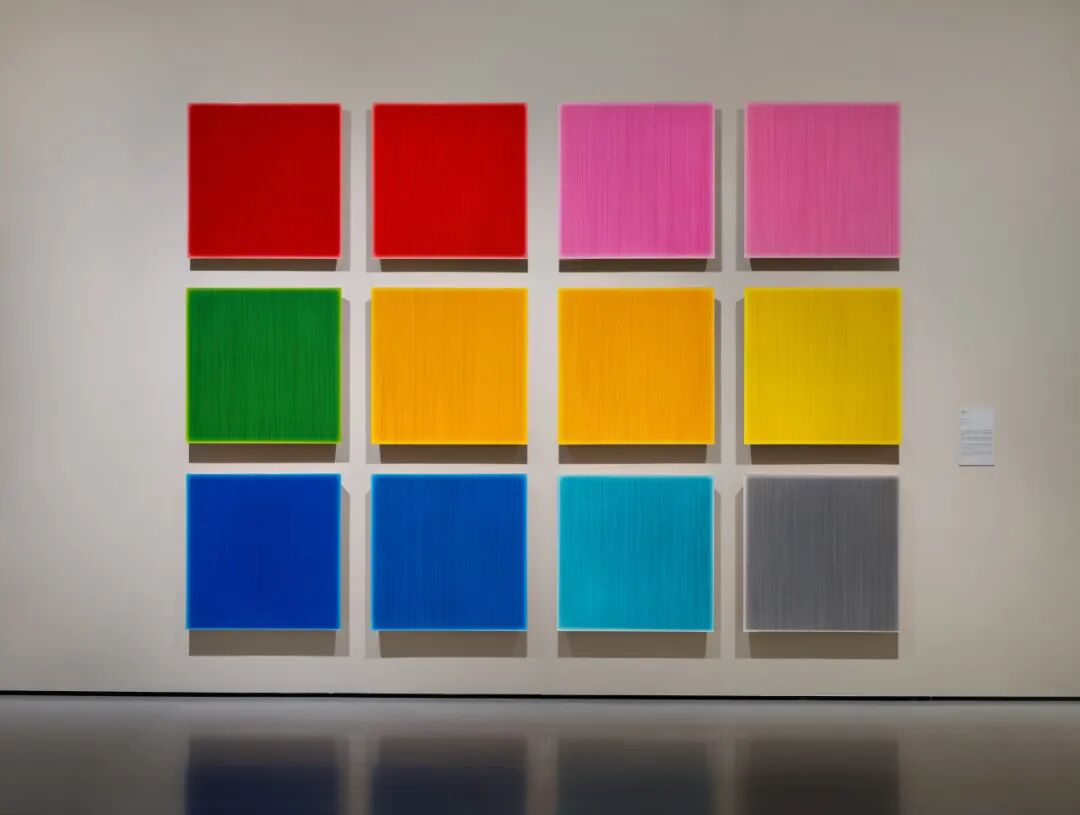
色彩之外
金玄植(韩国)
2025
丙烯颜料、树脂、木框
80cm × 80cm × 12
Beyond The Color
Kim Hyun-shik(Korea)
2025
Acrylic on resin, wooden frame
80cm × 80cm × 12
《 色彩之外》是金玄植绘画创作中,对 “色彩之后的绘画” ——即超越色彩的感知与认知之场——进行最为集中呈现的代表性作品。在这一作品中,色彩已不再是用来表达情感或构成图像的要素,而是作为一种承载思考的媒介,以及绘画行为所留下痕迹的总体而发挥作用。 金玄植的创作在继承韩国单色画所探讨的物质性与重复性传统的同时,并未将其固化为单纯的美学形式。他并不把单色视为一种“完成的状态”,而是始终将其保留为一个持续敞开的过程。由此,《色彩之外》展示了单色画之后一代绘画所可能展开的当代性拓展。
Beyond The Color is a series of work that most fully condenses the central concern of Kim Hyun-shik’s painting: painting after color, a field of sensation and perception that goes beyond color itself. In this work, color no longer functions as a means of emotional expression or image construction, but instead operates as a medium through which thought passes, and as the totality of traces left by the act of painting. While Kim Hyun-shik inherits the Korean Dansaekhwa tradition’s exploration of materiality and repetition, he does not fix it into a mere aesthetic form. Rather than presenting monochrome as a “completed state,” he leaves it as an ongoing, open-ended process. In this way, Beyond The Color demonstrates a contemporary expansion of the possibilities available to painting in the post-Dansaekhwa generation.
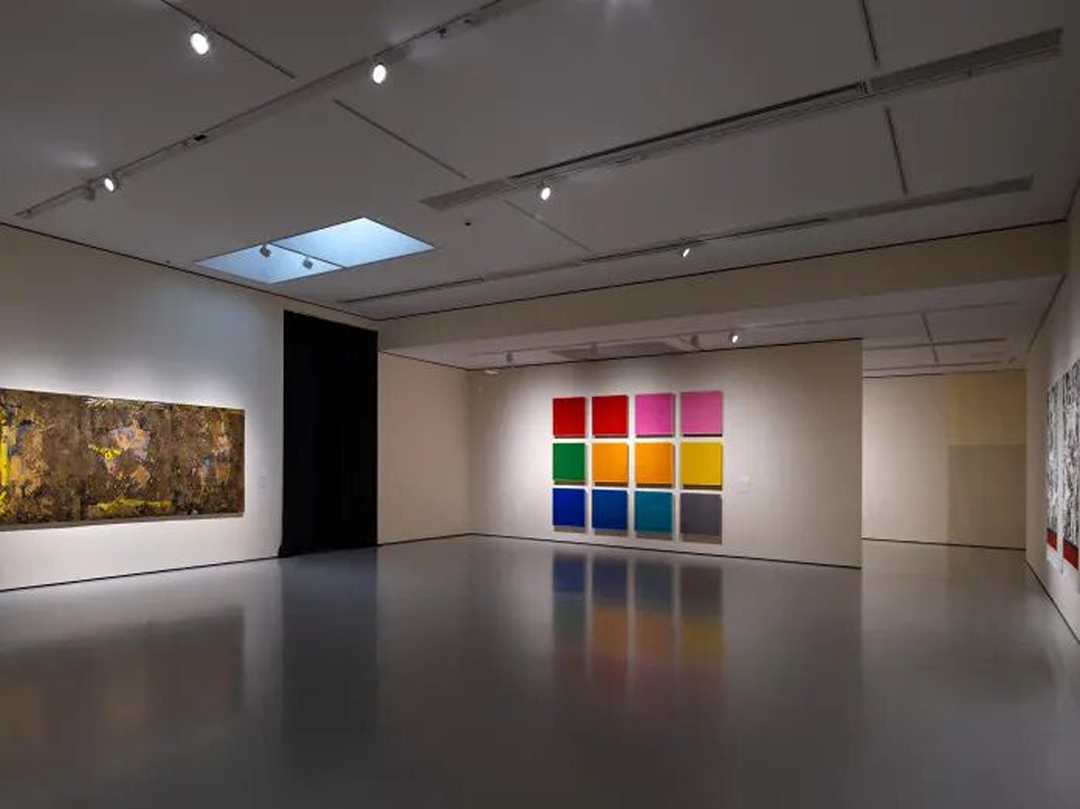
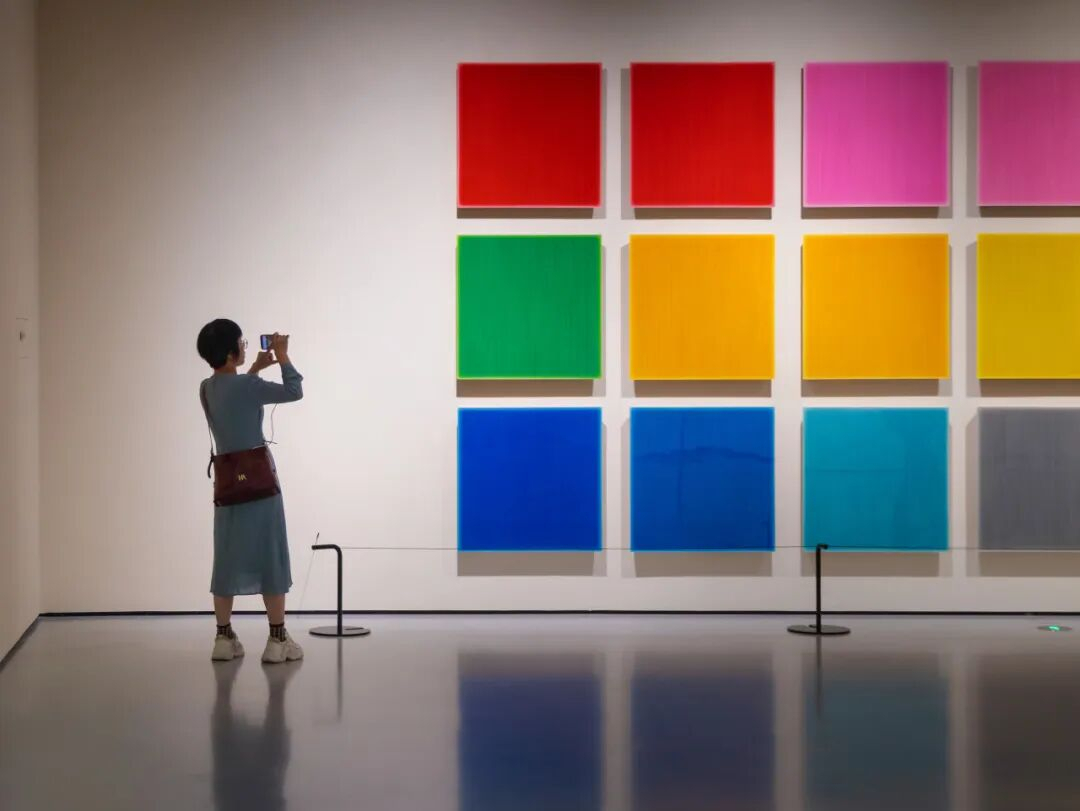
展览现场
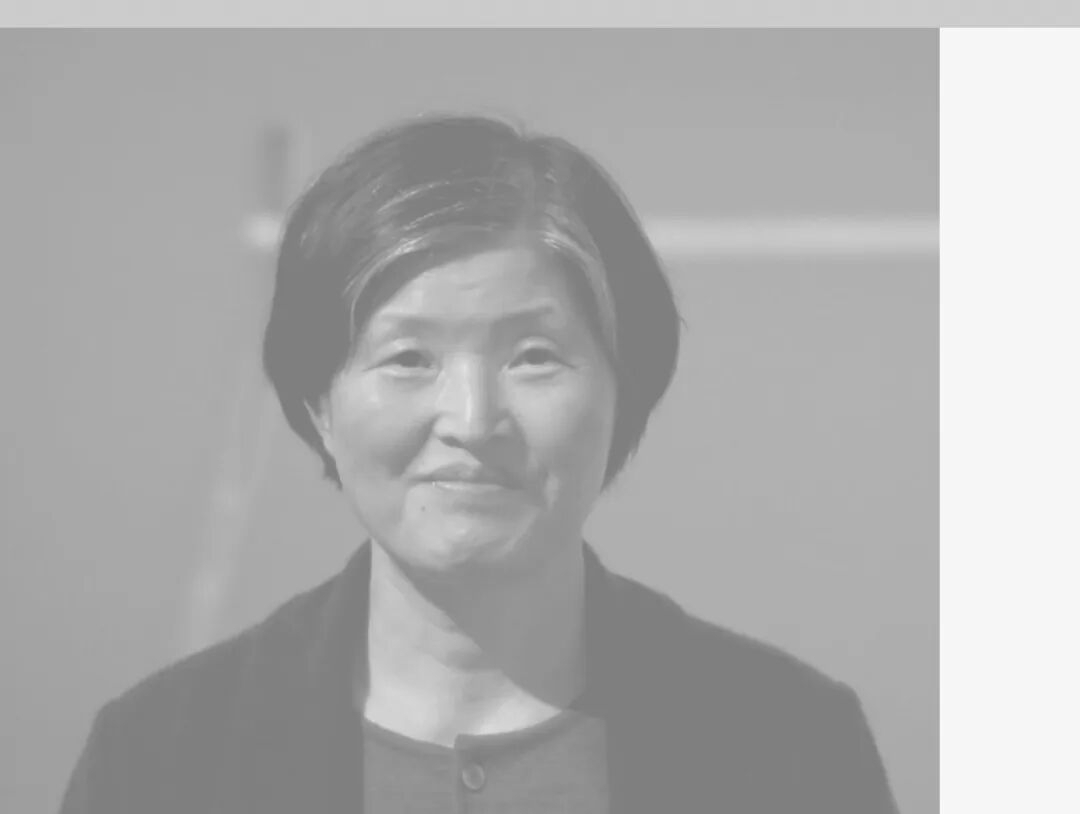 宋贤淑
宋贤淑Song Hyun-sook
1952 年生于韩国全罗南道潭阳,现生活、工作于德国汉堡。曾就读于汉堡美术学院。其创作以 “单一笔触” 为核心,融合东方书写性与当代抽象绘画语言,长期关注身体性、时间性与存在的关系。自 1980 年代以来在欧洲、韩国及美国等地举办个展,并参加柏林、纽约、首尔等地的群展。
Song Hyun-sook (b. 1952, Damyang, Korea) lives and works in Hamburg, Germany. Her work centers on the “single brushstroke,” blending Eastern calligraphy with contemporary abstract painting, focusing on corporeality, temporality, and existence. Since the 1980s, she has held solo exhibitions in Europe, Korea, and the U.S., and participated in group shows in Berlin, New York, and Seoul.
Song Hyun-sook (b. 1952, Damyang, Korea) lives and works in Hamburg, Germany. Her work centers on the “single brushstroke,” blending Eastern calligraphy with contemporary abstract painting, focusing on corporeality, temporality, and existence. Since the 1980s, she has held solo exhibitions in Europe, Korea, and the U.S., and participated in group shows in Berlin, New York, and Seoul.
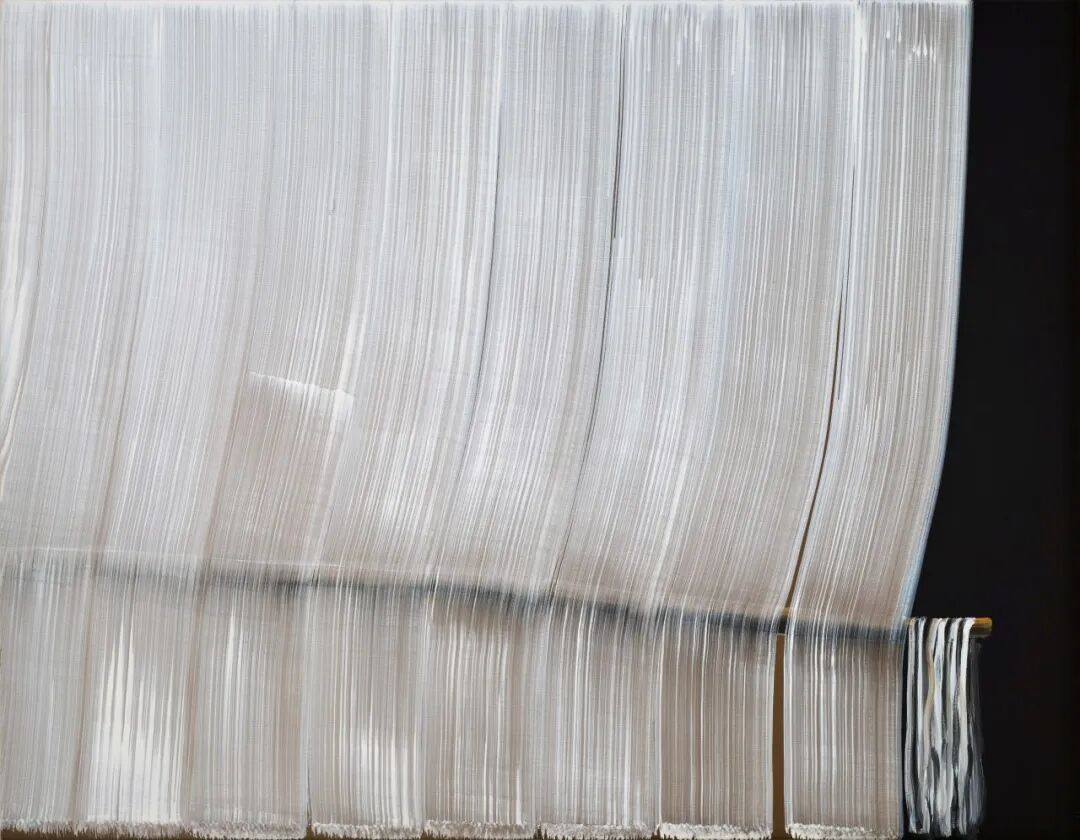
笔触 - 图表
宋贤淑(韩国)
2024
布面坦培拉
40cm × 180cm × 4cm
Brushstrokes-Diagram
Song Hyun-sook(Korea)
2024
Tempera on canvas
40cm × 180cm × 4cm
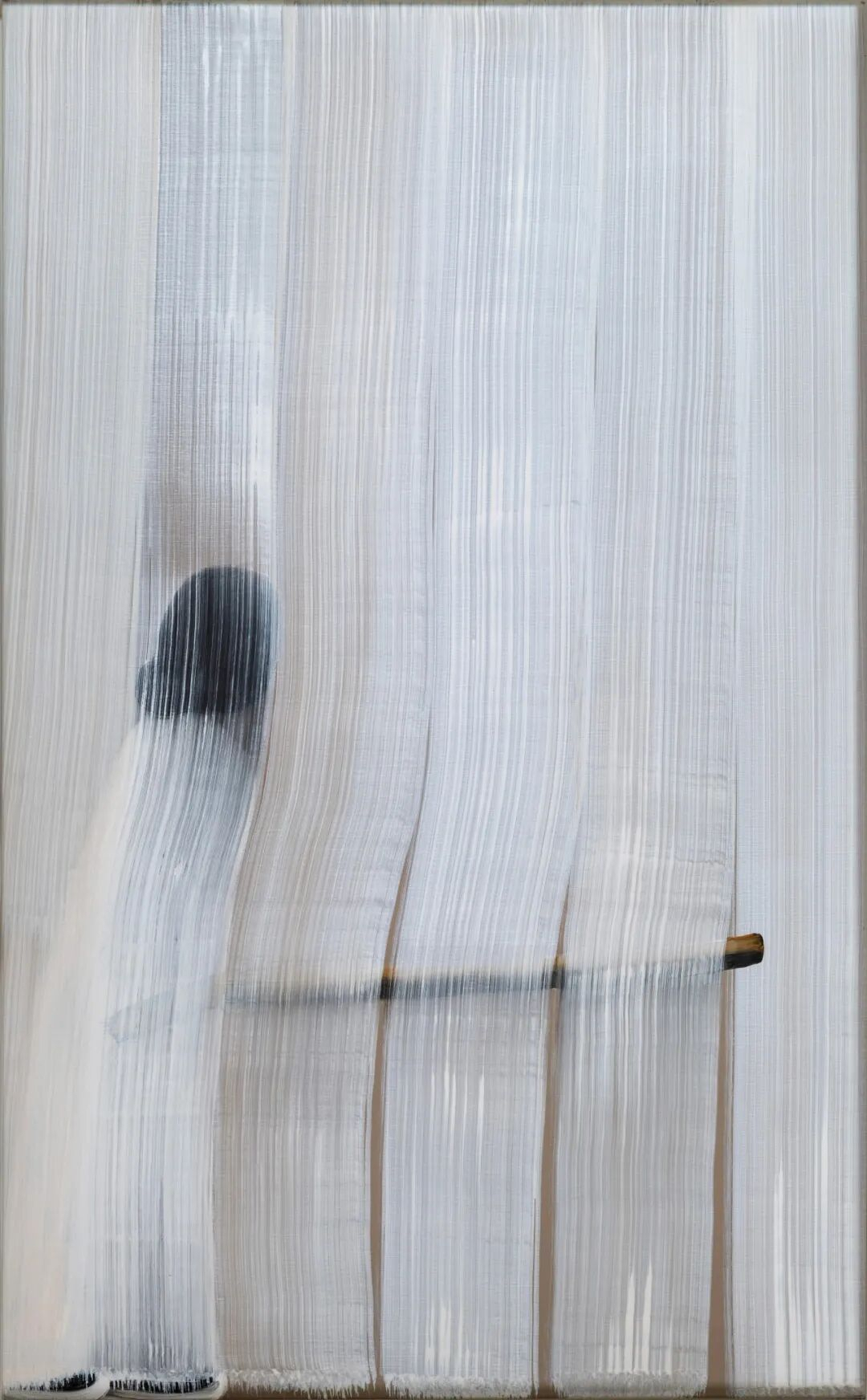
笔触 - 图表
宋贤淑(韩国)
2019/2024
布面坦培拉
170cm × 105cm × 4cm
Brushstrokes-Diagram
Song Hyun-sook(Korea)
2019/2024
Tempera on canvas
170cm × 105cm × 4cm
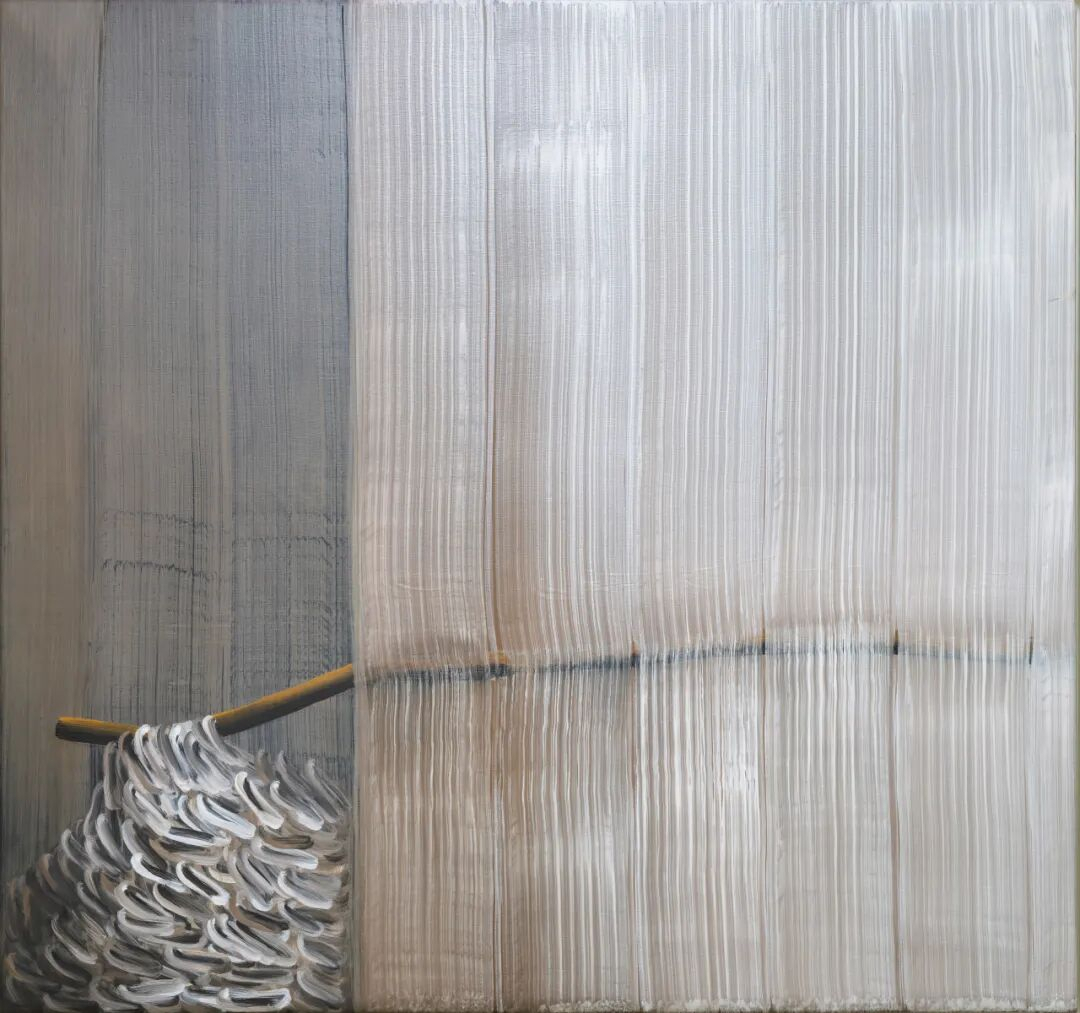
笔触 - 图表
宋贤淑(韩国)
2025
布面坦培拉
160cm × 170cm × 4cm
Brushstrokes-Diagram
Song Hyun-sook(Korea)
2025
Tempera on canvas
160cm × 170cm × 4cm
《 笔触 - 图表》是宋贤淑绘画世界中,对“划(笔触)”这一概念的思考最为凝练的作品。艺术家将西方传统技法坦培拉(Tempera)与韩国书写式笔法相结合,将童年时期对韩国的记忆、异国他乡的孤独感以及存在的本质,浓缩于“一笔”之中,“划”并非单纯的造型单位或形式元素,而是一种同时承载着时间、身体与存在痕迹的最小事件单元。作品通过对笔触数量的严格限制,将绘画行为高度压缩,使每一道笔触都显现为时间、身体与存在的痕迹。在这件作品中,绘画不再是被描绘出的图像,而是一种正在被维系的平衡状态。
Brushstrokes-Diagram is a series of work in which Song Hyun-sook's sustained reflection on the notion of “brushstroke” is most fully condensed. The artist combines the traditional Western technique of tempera with Korean calligraphic brushwork, distilling memories of childhood in Korea, the sense of solitude in a foreign land, and the essence of existence into a single brushstroke. In this work, the stroke is not merely a formal or compositional unit, but the smallest event that simultaneously carries traces of time, body, and existence. By strictly limiting the number of strokes, Brushstrokes-Diagram series intensiffes the act of painting, allowing each stroke to emerge as a trace of time, corporeality, and being. Here, painting does not exist as a depicted image, but as a state of balance that is continuously maintained.
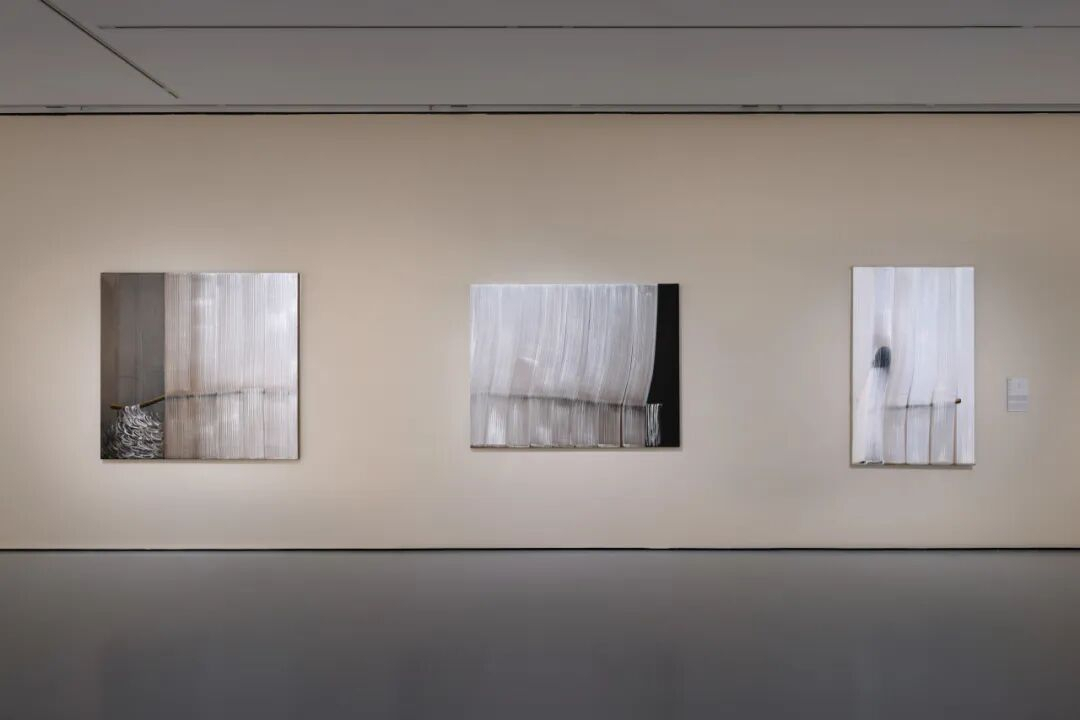
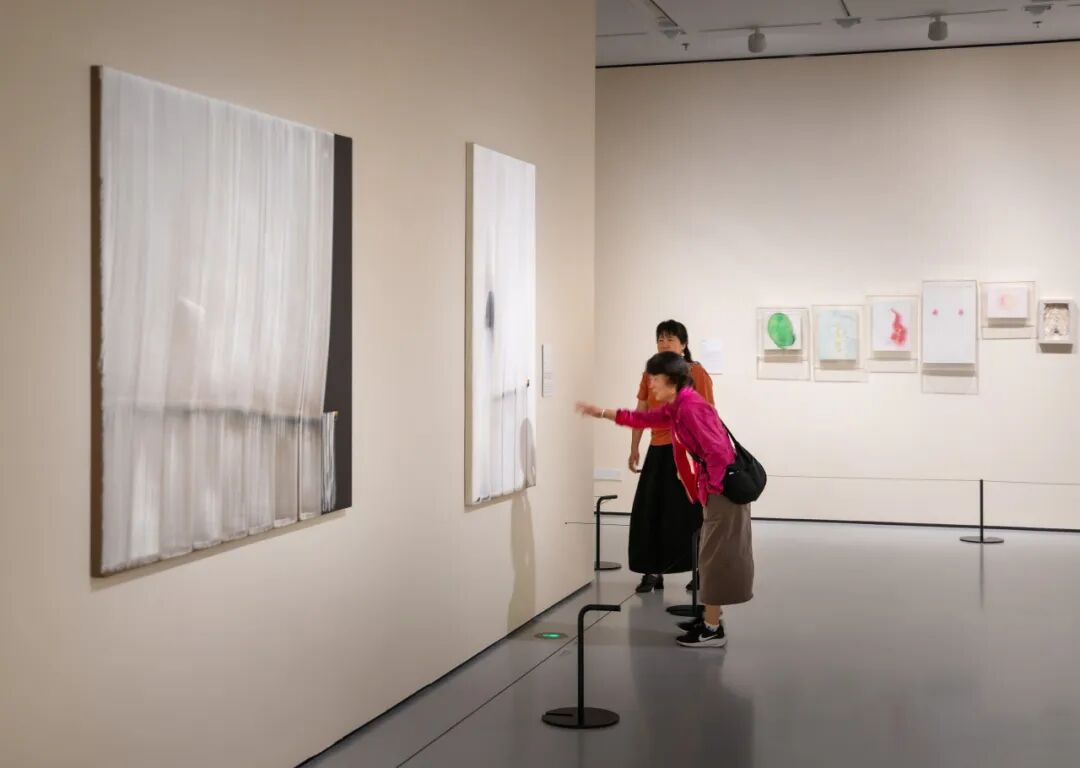
展览现场
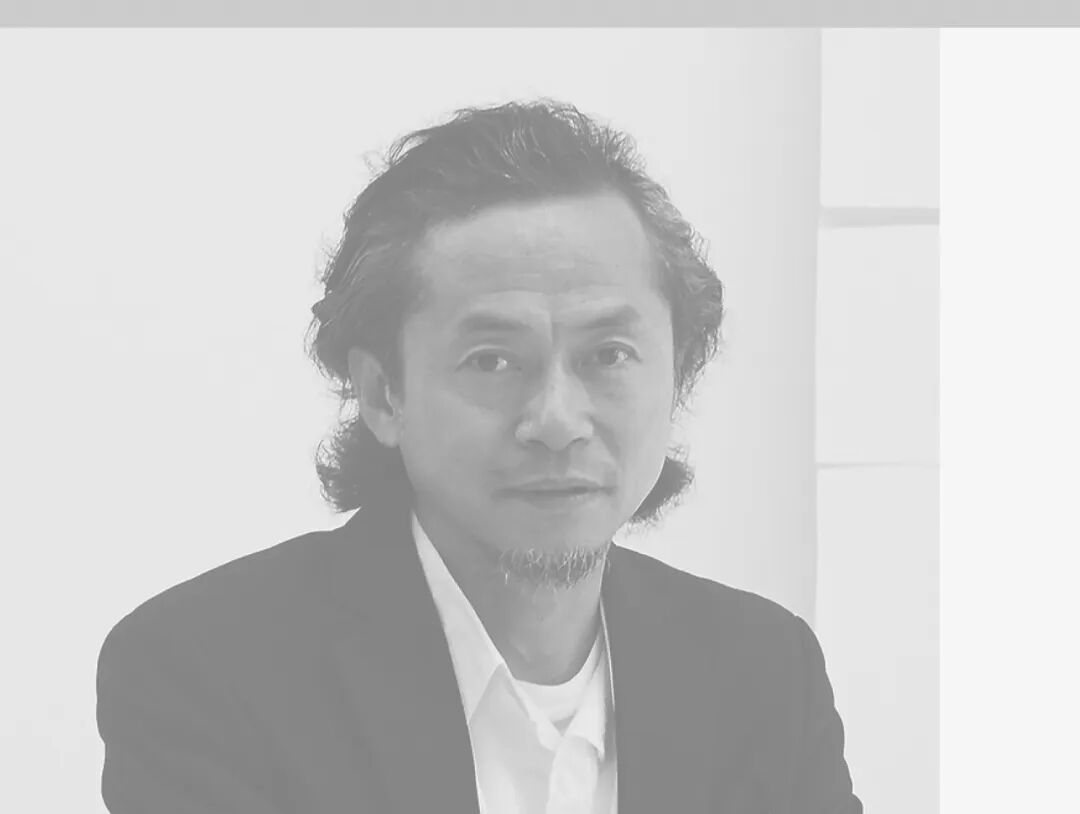 郑载荣
郑载荣J Young
1965 年生于韩国庆尚北道醴泉,硕士毕业于弘益大学绘画系。其创作以绘画、装置、版画及行为等多种媒介展开,关注物质性、感知与存在的关系。1990 年共同创立 “Golden Apple” 艺术团体,被视为韩国新世代艺术运动的重要成员。自1994年起,已在首尔、慕尼黑、巴黎、科隆、纽约等地举办个展,并参加 Art Cologne、Art Paris 等国际艺术博览会及群展。
J Young (b. 1965, Yecheon, Korea). Hold a master degree in Painting from Hongik University. Works across painting, installation, printmaking, and performance, focusing on materiality, perception, and existence. Co-founded the “Golden Apple” collective in 1990, a key figure in Korea’s new generation art movement. Has held solo exhibitions in Seoul, Tokyo, Munich, Paris, Cologne, New York since 1994, and participated in Art Cologne, Art Paris, and other international fairs and group shows.
J Young (b. 1965, Yecheon, Korea). Hold a master degree in Painting from Hongik University. Works across painting, installation, printmaking, and performance, focusing on materiality, perception, and existence. Co-founded the “Golden Apple” collective in 1990, a key figure in Korea’s new generation art movement. Has held solo exhibitions in Seoul, Tokyo, Munich, Paris, Cologne, New York since 1994, and participated in Art Cologne, Art Paris, and other international fairs and group shows.
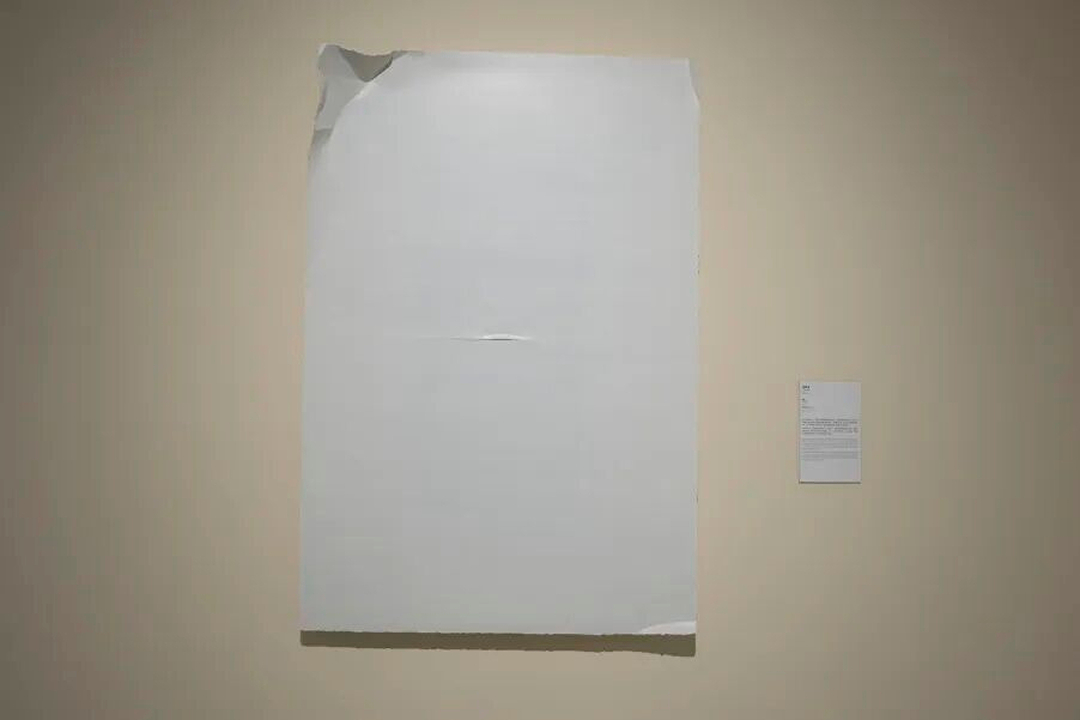
瞬间
郑载荣(韩国)
2025
木板综合媒介
162.2cm × 112.1cm
Moment
J Young(Korea)
2025
Mixed media on panel
162.2cm × 112.1cm
在作品《瞬间》中,“瞬间”并非转瞬即逝的时间切片,而更接近于时间在某一节点停驻并凝固为物质的状态。画面由细微的颗粒构成,表面看似均质,却始终处于轻微的震荡之中;它并不再现某个具体形象,而是显现出时间不断积累所留下的痕迹。 在这件作品中,绘画并非用来展示“什么”的媒介,而是时间曾经停留过的场所。观者站在画面之前,被要求思考的并非“看到了什么”,而是“能够停留多久”。《瞬间》正是通过这种凝视的持续性,使人感知到时间的密度。
In the work Moment, the “moment” is not a fleeting slice of time that disappears instantly. Rather, it is closer to a state in which time comes to a halt at a certain point and solidifies into material form. The surface is composed of fine particles—seemingly uniform, yet constantly vibrating—revealing not the representation of a specific image, but the traces of time accumulated over duration. In this work, painting is not a medium meant to show something, but a site where time has come to rest. Standing before the canvas, the viewer is asked less “what do I see?” than “how long can I remain here?” Moment thus enables a sensory awareness of the density of time through the sustained act of looking.
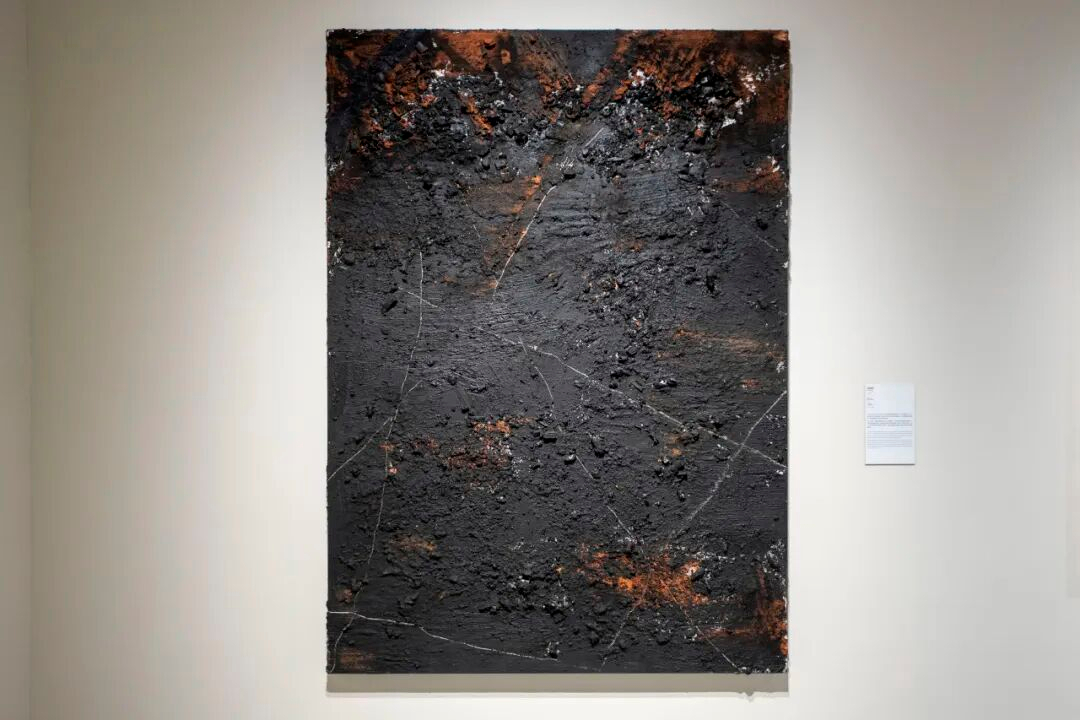
好像 / 似
郑载荣(韩国)
2025
布面综合媒介
227cm × 162cm
Like-150mm
J Young(Korea)
2025
Mixed media on canvas
227cm × 162cm
《好像 / 似》是 J Young 自 1991 年起长期持续的重要系列作品,其中标题中的“150mm”指的是艺术家与画面之间、身体与物质之间的物理与知觉距离。这并非情感或表现的隐喻,而是使绘画行为得以发生的具体条件。 在这一系列中,画面表层被刮擦、堆积并不断磨损,这一过程本身完整地保留在画面之上。绘画不再是图像的结果,而是身体在维持特定距离的前提下反复介入所留下的记录。“like”一词并不指向相似性或情感上的好感,而是暗示着相似与差异之间那一条微妙而不稳定的间隙。
Like–150mm is a significant series that J Young has pursued over an extended period since 1991. The “150mm” in the title refers to the physical and perceptual distance between the artist and the surface, between the body and material. It is not a metaphor for emotion or expression, but a concrete condition that enables the act of painting. Within this series, the surface is scratched, layered, and worn down, and this very process is fully inscribed onto the canvas. Painting is no longer the result of an image, but a record of repeated bodily intervention carried out while maintaining a fixed distance. The word “like” does not signify resemblance or emotional affinity, but rather points to a subtle gap between likeness and difference.
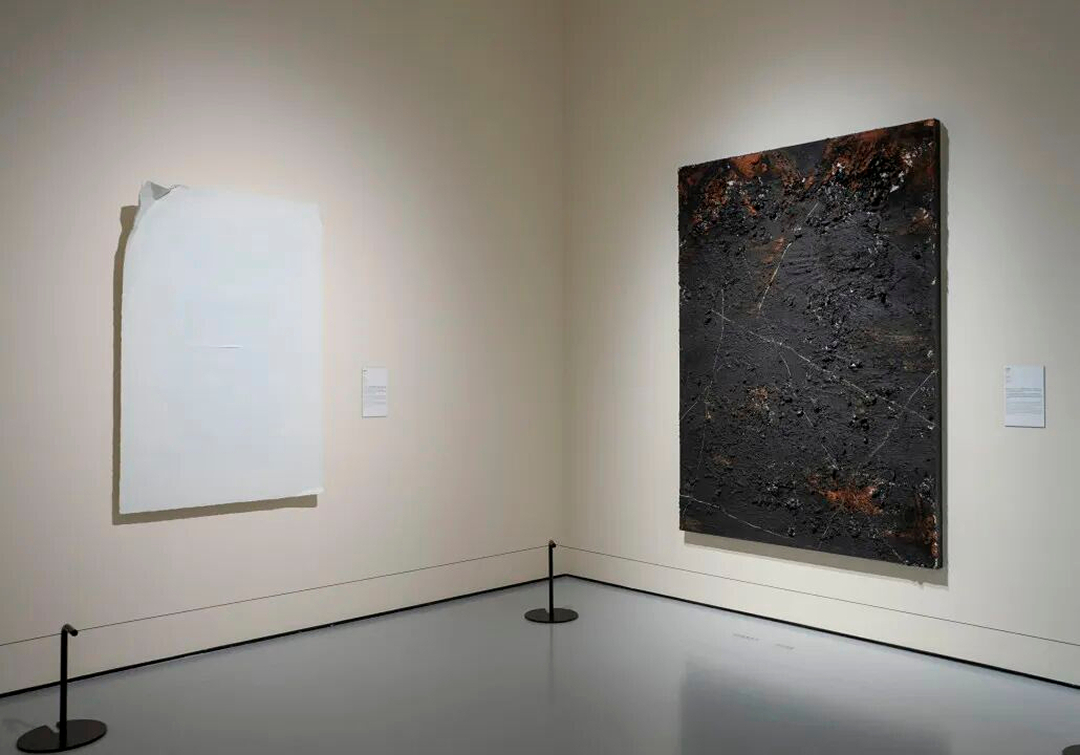
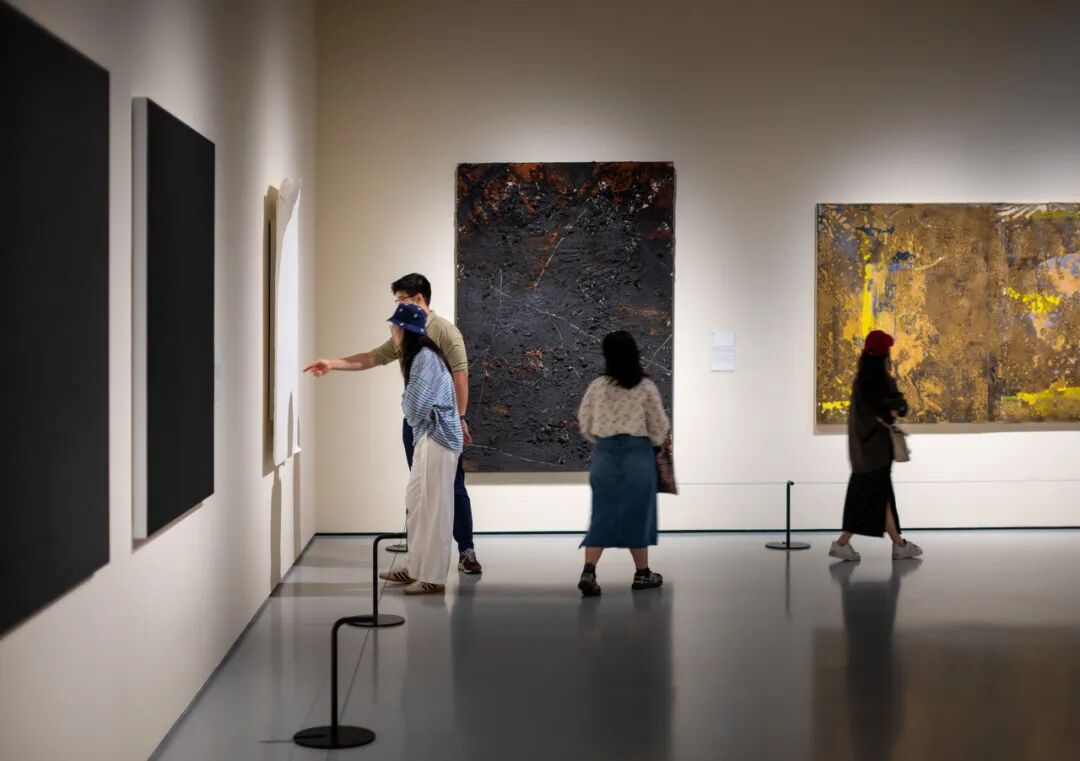
展览现场
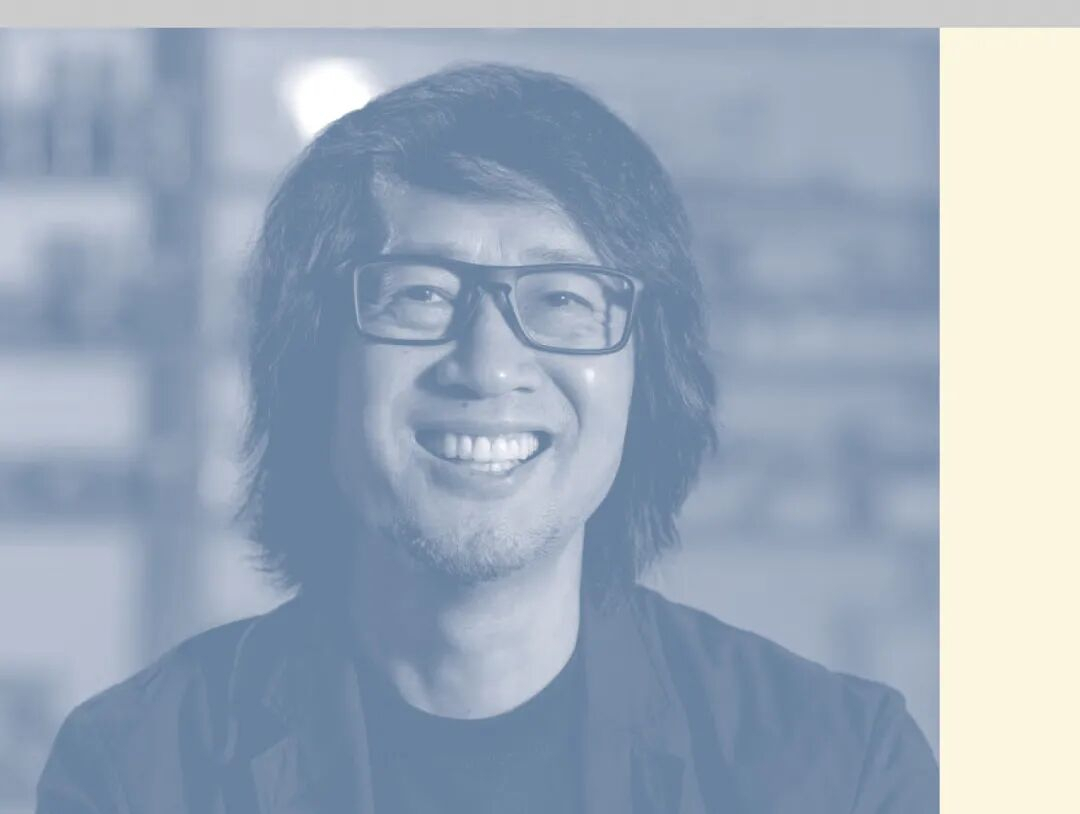 王绍强
王绍强Wang Shaoqiang
1969年出生于广东汕头,现生活和工作于广州。广东美术馆馆长,二级研究员,教授,博士生导师。享受国务院特殊津贴专家。王绍强深耕于当代水墨的创新研究,将家乡岭南文化的包容性与现代地理坐标、自然科学元素相结合,创造出一种理智且富有诗意的 “人文山水” 风格。作为极具影响力的策展人,他曾成功策划成都双年展及多届广州三年展。其作品多次亮相威尼斯双年展等国际舞台,并被国内外重点美术馆广泛收藏。
Wang Shaoqiang (b. 1969, Shantou, China), lives and works in Guangzhou. He is the director of Guangdong Museum of Art, a professor, a doctoral advisor, and the recipient of special allowances from the State Council. His practice focuses on contemporary ink art, blending Lingnan culture with modern geography and natural sciences to create a rational, poetic “humanistic landscape.” He has curated the Chengdu Biennale and multiple Guangzhou Triennials. His works have been shown at the Venice Biennale and are widely collected by major museums in China and abroad.
Wang Shaoqiang (b. 1969, Shantou, China), lives and works in Guangzhou. He is the director of Guangdong Museum of Art, a professor, a doctoral advisor, and the recipient of special allowances from the State Council. His practice focuses on contemporary ink art, blending Lingnan culture with modern geography and natural sciences to create a rational, poetic “humanistic landscape.” He has curated the Chengdu Biennale and multiple Guangzhou Triennials. His works have been shown at the Venice Biennale and are widely collected by major museums in China and abroad.
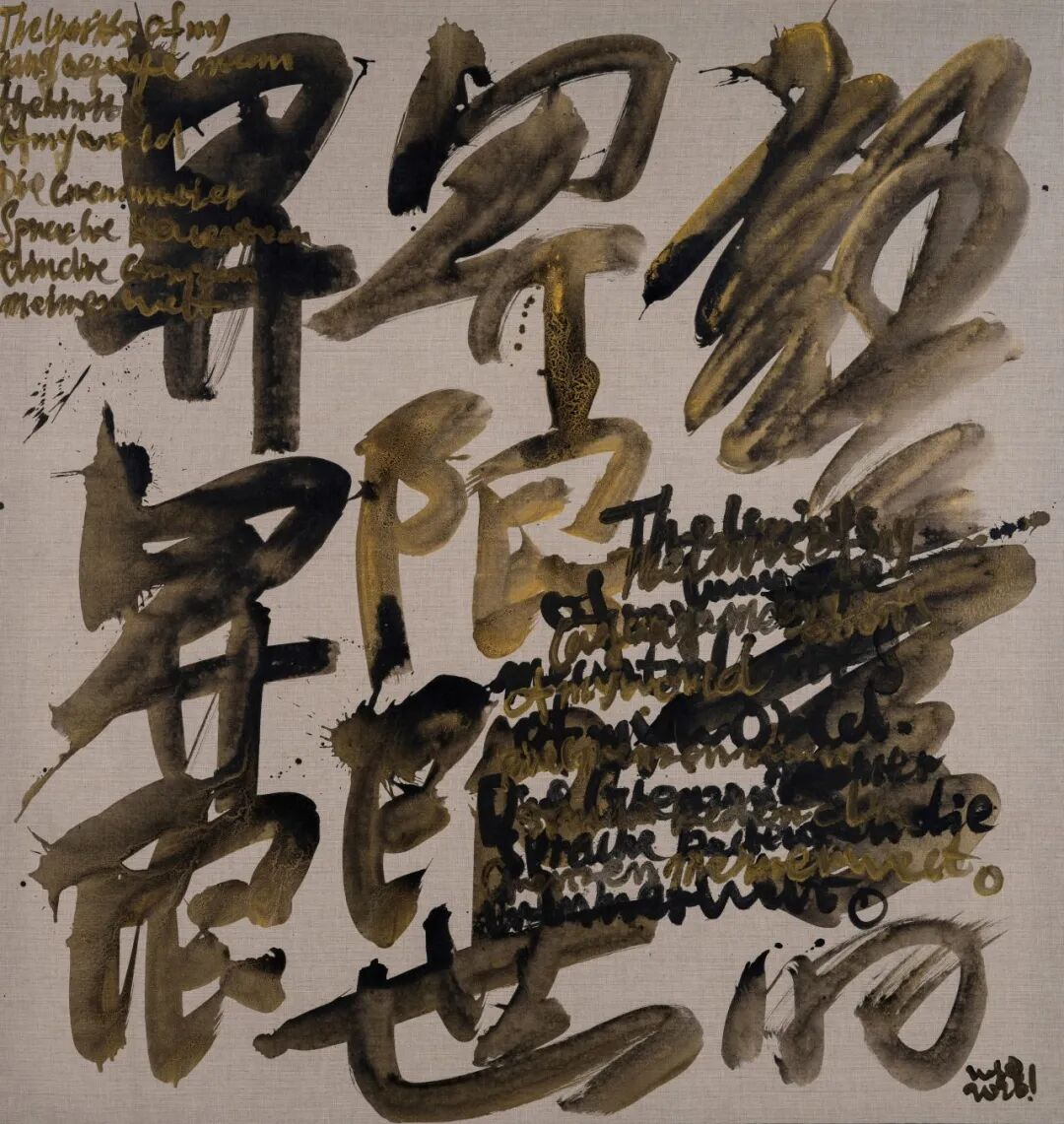
语言的界限
王绍强(中国)
2026
布上绘画
180cm × 190 cm
The Limits of Language
Wang Shaoqiang(China)
2026
Oil on canvas
180cm × 190cm
内容:语言的界限即世界的界限。
出处:路德维希·维特根斯坦《逻辑哲学论》
Text Content: The limits of language mean the limits of my world.
Source: Ludwig Wittgenstein,Tractatus Logico-Philosophicus
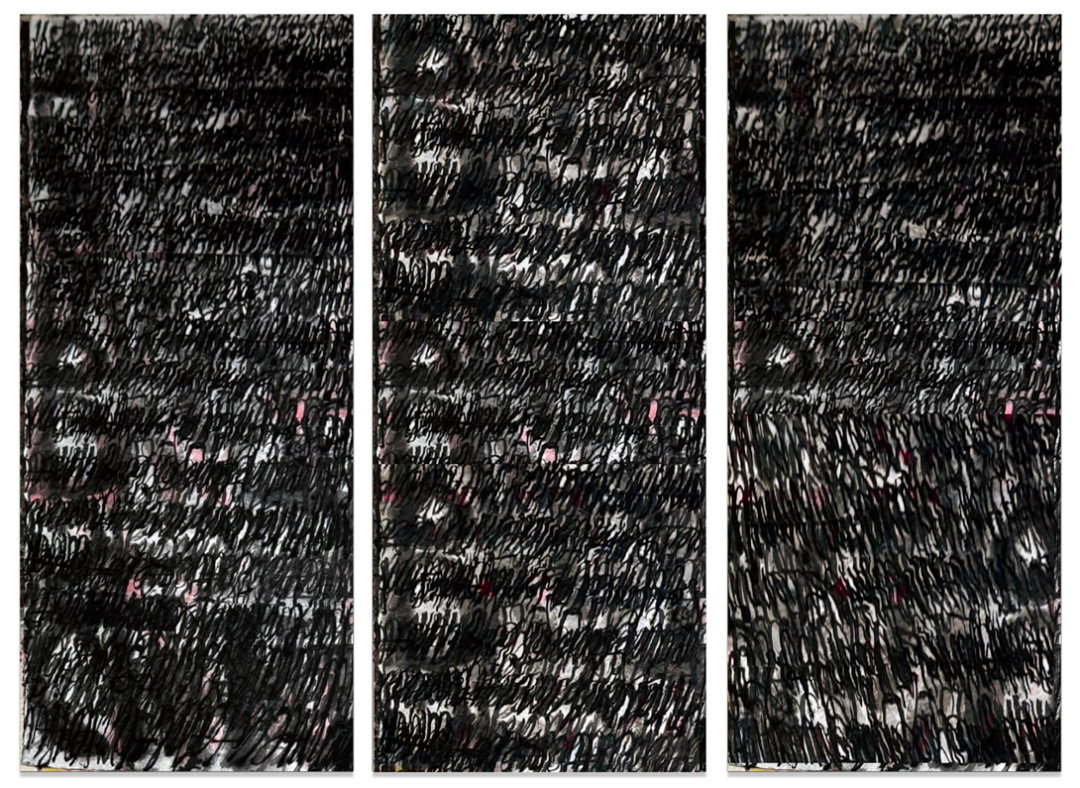
连续性的谱系
王绍强(中国)
2025
纸本水墨
550cm × 220cm × 3
The Spectrum of Continuity
Wang Shaoqiang(China)
2025
Ink on paper
550cm × 220cm × 3
内文:人类理解自然的思想历程中贯穿着两条路径。西方传统自古希腊起,将自然置于人的对面,成为被剖析的客体。从原子论到笛卡尔的主客二分,自然被视作精密机械,其价值在于为人所用。这一路径虽释放了巨大能量,却内嵌了疏离的基因。当技术时代将其推向极端,自然沦为可计算的“持存物”时,便引发了海德格尔所警示的存在危机。为此,西方思想内部展开调校:怀特海的过程哲学以“现实机缘”为基本单位,重构出自然作为创造性关系网络;奈斯的深层生态学则将伦理认同扩展至整个生命网络。另一条路径则在东方思想中蜿蜒千年。传统宇宙观从未将自然视为机械,而是一个自生自化的生命整体。《易经》以“生生之谓易”为宇宙本德;老子“道法自然”揭示万物“自己如此”的本然状态。李约瑟将这种世界观概括为“有机的自然主义”,并指出其与西方“机械论”形成了两种互补的认知谱系。他预见,当科学面对复杂生命系统时,东方注重关系与过程的“有机哲学”将显现其当代价值。 在生态危机的背景下,这两种谱系的对话催生了生态文明思考的创造性生成。这并非简单的复归或移植,而是立足于文化血脉的“综合性生成”。“山水林田湖草沙是生命共同体”的论断具象化了“有机整体”观,体现了基于关系的生态拓扑学认知。这一切最终指向“人与自然和谐共生的现代化”愿景:人类作为生命共同体中自觉的成员,以智慧参与共同体的创造性演化。当代生态思想代表了一种融合的文明姿态,它汲取东西方智慧,提醒我们生态挑战的答案不在于非此即彼的选择,而在于培育新的“连续性”——既是对万物互联的敬畏,也是对文明与地球和谐共生的求索。
Text Content: The intellectual history of humanity's understanding of nature is marked by two distinct trajectories. The Western tradition, originating in ancient Greece, positioned nature as an object opposite humanity, to be analyzed and defined. From atomism to Cartesian subject-object dualism, nature was conceived as a precision mechanism, valued primarily for human utility. While this path unleashed immense transformative energy, it embedded within it a seed of alienation. When pushed to its extreme in the technological age—reducing nature to a calculable "standing-reserve"—it precipitated the existential crisis Heidegger warned of. In response, internal correctives emerged within Western thought: Whitehead's process philosophy, reframing nature as a creative relational network through "actual occasions," and Naess's deep ecology, extending ethical identification to the entire web of life. A different path has meandered through Eastern thought for millennia. The traditional cosmological view never regarded nature as a machine, but as a self-generating, self-transforming living whole. The Book of Changes posits ceaseless generation ("sheng sheng") as the cosmic virtue, while Laozi's "the Dao models itself on what is naturally so (ziran)" reveals the "so-of-itself" quality of existence. Joseph Needham characterized this worldview as "organic naturalism," identifying it as a complementary cognitive genealogy to Western "mechanism." He foresaw that as science confronts complex living systems, the relational and process oriented "organic philosophy" of the East tradition would demonstrate its contemporary relevance. Amidst the ecological crisis, the dialogue between these genealogies has catalyzed the creative formation of thought of ecological civilization. This is neither a simple return to the past nor a mere transplant, but a "comprehensive generation" rooted in cultural lineage. The assertion that "mountains, rivers, forests, farmlands, lakes, grasslands, and deserrs form a life community" concretizes the "organic whole" perspective, embodying a relational, topological ecological understanding. Ultimately, this points toward the vision of a "modernization of harmony between humanity and nature": humans as conscious, agentive members of the life community, participating wisely in its creative evolution. Contemporary ecological thought represents a synthesized civilizational posture. Drawing from both Eastern and Western intellectual wells, it reminds us that the answer to the ecological challenge lies not in an either/or choice, but in cultivating a new form of "continuity"—one rooted in reverence for the interconnectedness of all things and a steadfast pursuit of harmonious coexistence between civilization and Earth's living network.
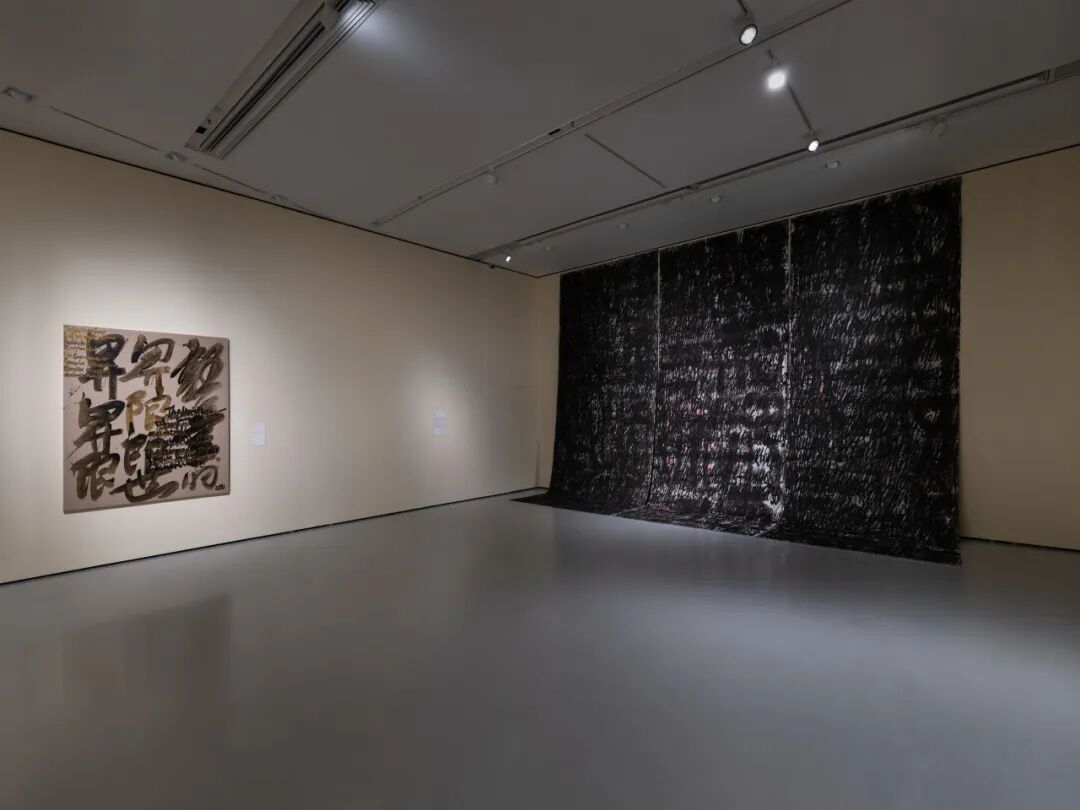
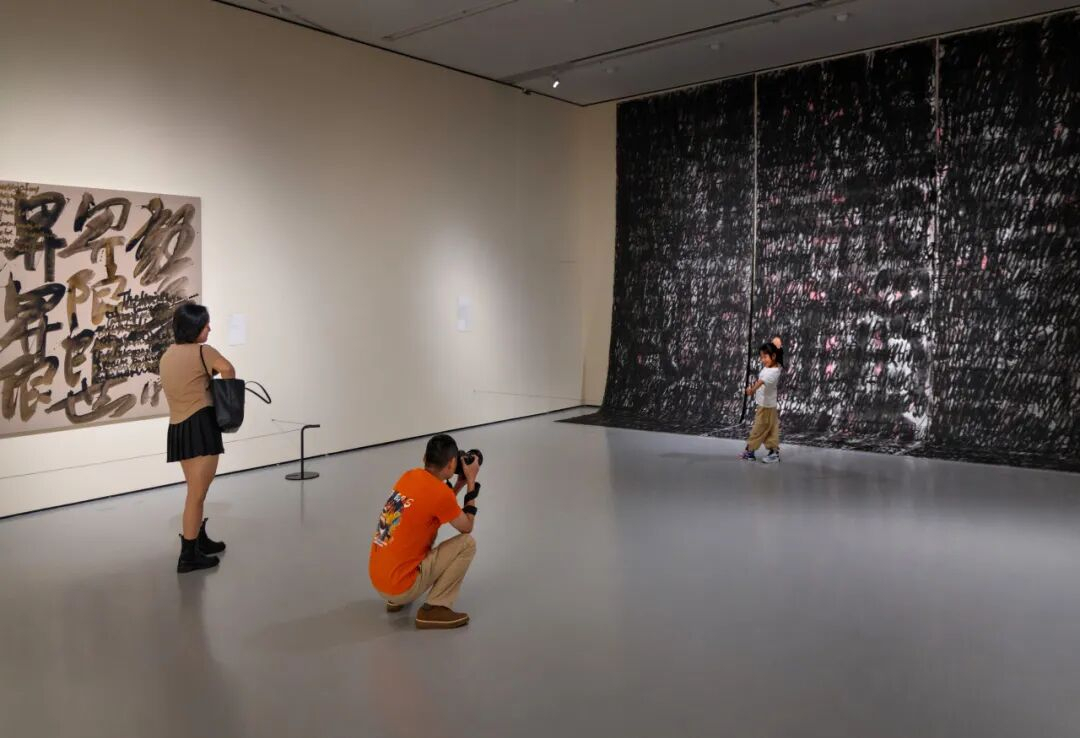
展览现场
审定 / 涂晓庞
审校 / 曾睿洁
摄影 / 杜悦儿 曾雨林
资料提供 / 龚穗明 石裕榕
排版设计/ 李漾 余舒雅
编辑 / 黄欣琪
开放时间——每周二至周日9:00至17:00(16:30停止入场,16:45开始清场)
逢周一闭馆(法定节假日和特殊情况除外)。
广东美术馆新馆(白鹅潭):广东省广州市荔湾区白鹅潭南路19号
前台电话: (020) 88902999
广东美术馆本馆(二沙岛):广东省广州市越秀区二沙岛烟雨路38号
前台电话: (020) 87351468