隐力东方:中日韩抽象艺术的时间潜流 | “潜象:隐匿的真实——中日韩抽象艺术展”正在热展
“潜象:隐匿的真实——中日韩
抽象艺术展”正在热展
本次展览聚焦抽象艺术中的观念与力量
集结中、日、韩三国15位艺术家作品
时间跨度从20世纪中叶至今
以多元媒材探抽象艺术潜藏之观念、力量
承载时间、记忆与精神密度
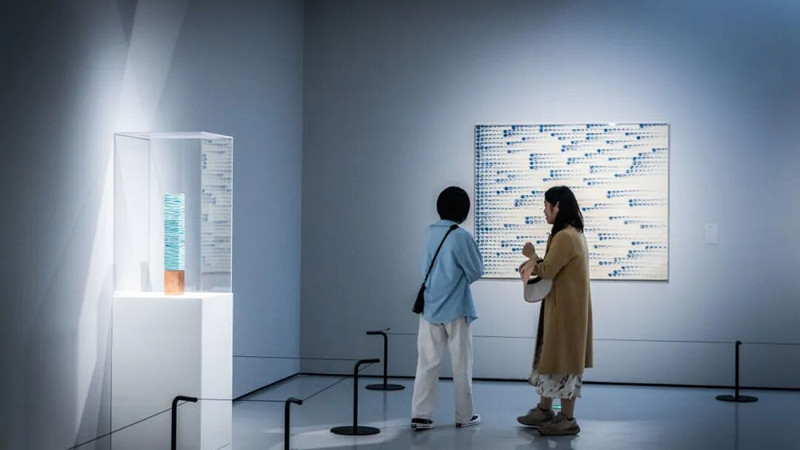
展览现场
二十世纪的抽象艺术,使绘画逐渐从对外部世界的再现中抽离出来,转向线条、色彩与结构自身的秩序与能量。随着现代主义在全球传播,这一艺术语言在中国、日本和韩国广泛展开,艺术家一方面学习西方现代主义与抽象艺术,与欧美抽象表现主义等潮流形成既吸收又反思的对话;另一方面又将这种经验与本土的书写传统、物性观念和日常修行相交织,逐渐形成带有东方精神气质的抽象创作谱系。
In the twentieth century, abstract art gradually shifted painting away from the mere representation of the external world and toward the internal order and energy of lines, colors and structures. As modernism spread across the globe, this artistic language came to be widely practiced in China, Japan and South Korea. On the one hand, artists engaged deeply with Western modernism and abstract art, entering into a complex dialogue with tendencies such as European and American Abstract Expressionism—at once receptive and critical. On the other hand, they interwove these encounters with indigenous traditions of writing and painting, with conceptions of materiality, and with practices of daily cultivation, thereby forging abstract idioms suffused with an East Asian spiritual temperament.

展览现场
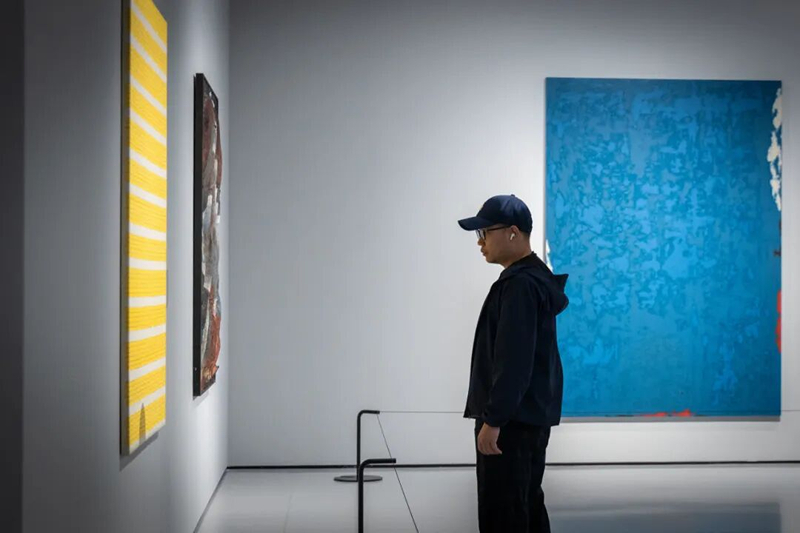
在东方文化与艺术传统中,绘画与书写并不以再现外部对象为终极目标,而更关乎“立象以尽意”的表达方式。从这一意义上说,东方文化在“无形之形”的实践中,为后来抽象艺术的发生打下了观念与感知上的基础。一些艺术家在抽象创作中延续中国山水画与书法传统,在一笔一墨中体悟宇宙秩序与生命流动,以线、点、色域和留白取代具象描写,通过画面的起伏、节奏与结构,营造出近乎“无形之大象”的宇宙场域。在东方思想传统中,儒家“日新”、道家“守静”和佛教“观行”均提到在实践中淬炼心性。战后韩国兴起的“单色画”(Dansaekhwa),常被理解为在绘画领域对这一“在实践中修养”精神的回应,艺术家通过在画布、纸面等媒材上的反复刻划、涂抹与堆叠,将创作过程转换为一种冥想式修行的绘画谱系。与此同时,日本的前卫实践从禅宗与侘寂美学中汲取灵感,艺术家主动拥抱新的媒材与动作方式,在创作中融入肢体实验、偶然性与材料反应。关于气韵、留白、物性与修行的东方观念,在当代抽象中获得了新的表达方式。
Within Eastern cultural and artistic traditions, painting and calligraphy are not ultimately oriented toward the faithful depiction of external objects, but toward a mode of expression that “establishes images in order to convey meaning” (li xiang yi jin yi). In this sense, the long-standing exploration of “form without fixed form” has helped lay the conceptual and perceptual groundwork for later abstract art. In their abstract practices, certain artists continue the legacies of Chinese landscape painting and calligraphy, seeking to sense cosmic order and the flow of life through each stroke and each breath. Lines, dots, color fields and blank spaces take the place of figurative description; through the undulations, rhythms and structures of the picture plane, they construct a kind of cosmological field akin to a “great image that has no fixed form.”
Within the broader traditions of Eastern thought, Confucian notions of “renewal each day” (ri xin), Daoist ideals of “guarding stillness” (shou jing), and the Buddhist practice of “contemplation in action” (guan xing) all emphasize the refinement of mind and character through daily, repetitive practice. In post-war South Korea, the emergence of Dansaekhwa (monochrome painting) has often been understood as a response, within the realm of painting, to this very ethos of “self-cultivation through practice”: by repeatedly incising, brushing and layering pigment on canvas, paper and other supports, artists transform the act of painting into a meditative discipline. At the same time, post-war avant-garde practices in Japan drew inspiration from Zen Buddhism and the aesthetics of wabi-sabi. Artists actively embraced new materials and modes of action, incorporating bodily experiment, chance and material reaction into their work. In this way, Eastern ideas concerning vital rhythm, emptiness and reserve, materiality and spiritual cultivation have found renewed expression within the field of contemporary abstraction.

展览现场
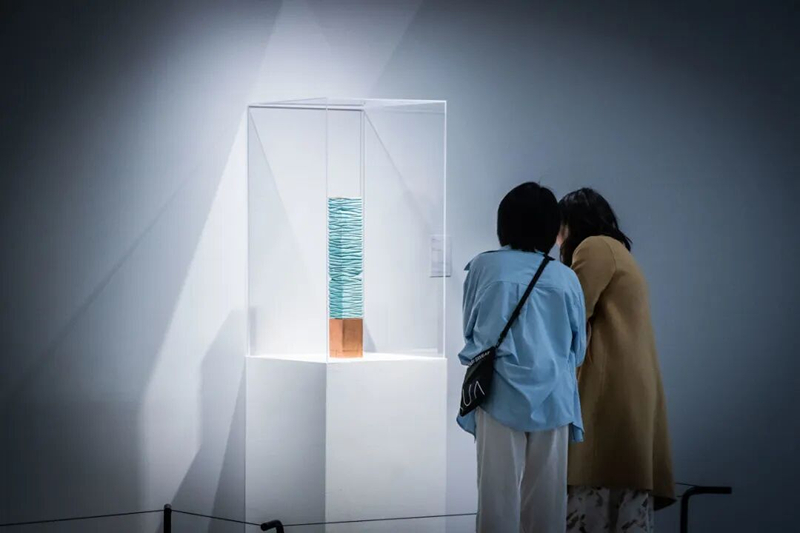
“潜象:隐匿的真实——中日韩抽象艺术展”意图聚焦抽象艺术过程中潜藏的观念与力量。展览汇集了十五位来自中国、日本和韩国的艺术家的作品,时间跨度从二十世纪中叶至当下,以画面气息、节奏与空间感在展厅展开。从山水结构与书写痕迹的抽离,到符号与格网的运用,再到水滴意象、纸张与麻布纤维、木材与漆层的反复堆叠与打磨,艺术家在不同的媒材与路径中探寻抽象如何承载时间、记忆与精神密度。
Latent Images: Hidden Truths — Abstract Art from China, Japan and South Korea focuses on the ideas and forces that lie latent within the processes of abstract art. Bringing together works by fifteen artists from China, Japan and South Korea, the exhibition spans from the mid-twentieth century to the present day, unfolding in the gallery through the atmospheres, rhythms and spatialities of the works on view. From the abstraction of landscape structures and traces of writing, to the deployment of symbols and grids, to water-drop imagery and the repeated layering and polishing of paper and burlap fibers, wood and lacquer, the participating artists explore, through diverse media and pathways, how abstraction can bear the weight of time, memory and spiritual density.


展览现场
广东美术馆持续关注当代艺术发展,希望通过本次展览展现东方抽象艺术不只是艺术观念的更新,更是在面对世界时的一种文化探索与精神姿态。
The Guangdong Museum of Art has long been committed to the development of contemporary art. Through this exhibition, we hope to show that East Asian abstract art is not merely an update of artistic concepts, but also a form of cultural exploration and a spiritual stance in the face of the wider world.
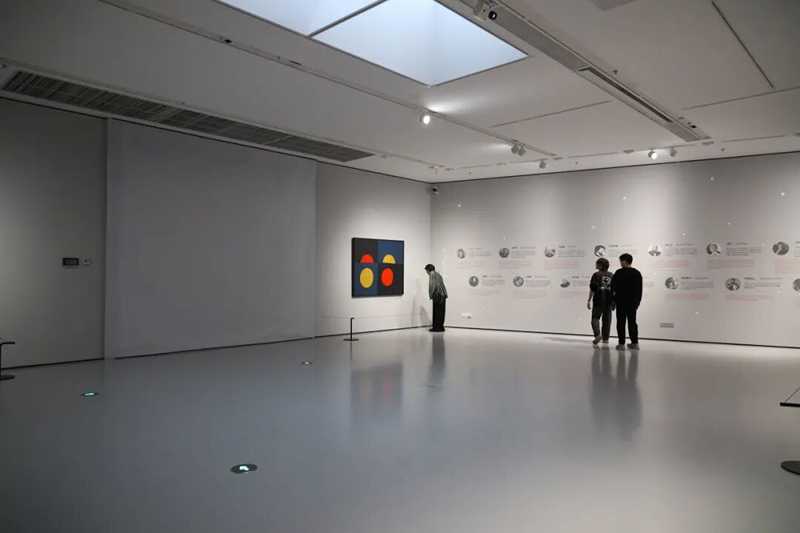
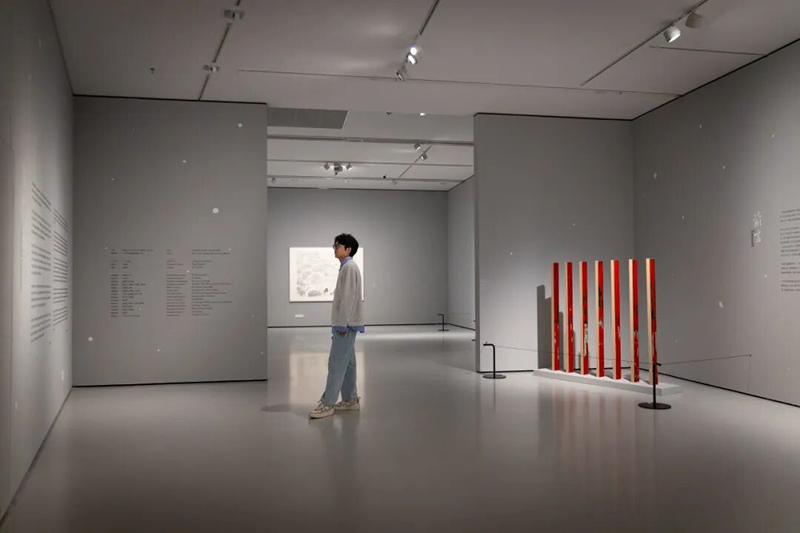
展览现场
展览信息

“潜象:隐匿的真实——中日韩抽象艺术展”
Latent Images: Hidden Truths — Abstract Art from China, Japan and South Korea
展期:2025年11月30日至2026年3月3日
地点:广东美术馆新馆四楼14号厅
(地址:广州市荔湾区白鹅潭南路19号)
主办单位:广东美术馆
出品人:王绍强
策展人:朴铁熙【韩】
Date: 2025.11.30-2026.03.3
Venue: Hall 14, 4F, Guangdong Museum of Art (BAIETAN)
(Address: No. 19, Bai'etan S. Rd., Liwan District, Guangzhou)
Organizer:Guangdong Museum of Art
Exhibition Producer: Wang Shaoqiang
Curator: Park Chul Hee [KR]
审定 / 涂晓庞
审校 / 曾睿洁
摄影 / 杜悦儿 李伟杰
资料提供 / 刘竹静
编辑 / 张萌


开放时间——每周二至周日9:00至17:00(16:30停止入场,16:45开始清场)
逢周一闭馆(法定节假日和特殊情况除外)。
广东美术馆新馆(白鹅潭):广东省广州市荔湾区白鹅潭南路19号
前台电话: (020) 88902999
广东美术馆本馆(二沙岛):广东省广州市越秀区二沙岛烟雨路38号
前台电话: (020) 87351468